Posted on Leave a comment

Log Cabin Music Room

Best Garden log Cabins Ireland has on sale

The Allure of Log Cabins: A Perfect Choice for Your Music Room

When it comes to building a log cabin music room, the environment plays a crucial role in shaping the sound and experience of playing and listening to music. One increasingly popular choice for these creative spaces is the log cabin. With their unique aesthetic, natural acoustics, and sustainable materials, log cabins offer a distinctive ambiance that enhances any musical endeavour. This article explores the various benefits of choosing a log cabin for your music room, including its acoustic advantages, quick construction, stylish aesthetics, affordability, and tips for creating your perfect musical retreat.

Why Timber Walls Create Exceptional Sound

Natural Reverb and Acoustics

piano in a log cabin music room
Perfect Log Cabin Music Room

One of the standout features of a log cabin music room is its ability to provide excellent sound quality. Timber walls possess unique acoustic properties that facilitate natural reverberation. The warmth and density of wood allow for sound waves to bounce off the surfaces efficiently, creating a rich and resonant audio experience. This natural reverb is particularly appealing for musicians and vocalists who thrive on nuances in sound. Unlike concrete or drywall, which can create harsh echoes, timber creates a more organic sound environment, fostering creativity and musical expression.

Additionally, the irregularities in wood surfaces can assist in diffusing sound waves, which minimizes standing waves and unwanted frequencies. This means that when you play an instrument or sing in a log cabin, you are enveloped in a balanced acoustic field, allowing for a more enjoyable and engaging musical experience. Whether you’re recording, practicing, or simply enjoying your favorite tunes, the natural acoustics of timber walls contribute significantly to the overall sound quality.

The Benefits of Timber in Music Spaces

Beyond aesthetics and sound, timber brings a host of benefits to a music room. Its natural insulating properties help maintain a stable temperature, ensuring a comfortable environment for musicians to work in, regardless of the season. This is especially important for those who may spend hours rehearsing or recording. Proper insulation also aids in soundproofing, providing an additional layer of privacy from external noise and disturbances.

Moreover, timber is a renewable resource, making it an environmentally friendly choice. In a world increasingly aware of sustainability, choosing a log cabin signifies a commitment to eco-conscious living. The natural materials used in log cabin construction not only contribute to a healthier indoor atmosphere but also resonate with the growing trend of sustainability in home building. Ultimately, the combination of acoustic benefits, comfort, and sustainability solidifies timber as an extraordinary choice for music spaces.

Quick Construction: Log Cabins Made Easy

Speed of Building Compared to Traditional Structures

Boy singing in a log cabin music room

When it comes to constructing your dream log cabin music room, time is often a critical factor. Log cabins are renowned for their efficient building processes. Unlike traditional block-built construction, drywall installation, and finishing, log cabins can be erected in a fraction of the time. Pre-cut logs are often delivered to the site, allowing for quicker assembly and minimizing labour costs.

This speed of construction means you can enjoy your music space sooner rather than later. Many log cabin kits come with detailed instructions and necessary materials, making it easier for DIY enthusiasts to take on the project themselves. Even if you opt for professional builders, the streamlined construction process allows for a more expedited timeline, enabling musicians to immerse themselves in their craft without prolonged waiting periods.

Pre-Fabricated Options for Swift Setup

Your Timber Living Garden Cabin can often be customized to suit your specific needs. Whether you want additional windows for natural light, specific room dimensions, or built-in storage for musical instruments, many companies offer design flexibility. This means that you can have a unique space tailored to your artistic vision without the lengthy design and construction phase typically associated with traditional builds.

Stylish Aesthetics of Log Cabins

Design Versatility and Customisation

Log cabins are not only functional but also incredibly stylish. The rustic charm of timber provides a unique aesthetic that can be styled in countless ways. From cozy and traditional to modern and minimalist, log cabins offer the versatility to create a music room that reflects your personal taste. The natural beauty of wood can seamlessly blend with various interior design styles, allowing for creative expression in how you choose to decorate your space.

Customization options are plentiful; you can choose the type of wood, the stain color, window placements, and even architectural features like exposed beams or wrap-around porches. This level of customization means that your music room can become a true reflection of you as an artist while serving as an inviting space for collaboration and creativity.

Affordability: The Cost-Effective Choice

Comparing Log Cabins to Traditional Builds

Cost is often a significant factor when considering building a music room, and log cabins can provide a more economical option compared to traditional homes. While initial investment costs may vary depending on size and materials, log cabins generally require fewer materials and less labor, leading to lower overall construction costs. This can be especially beneficial for musicians on a budget who still want to create a dedicated space for their craft.

Additionally, log cabins are known for their durability and low maintenance requirements. Traditional homes often require ongoing expenses for maintenance, such as painting and repairs. In contrast, log cabins, when properly constructed and maintained, can withstand the test of time, leading to long-term financial savings. The natural resistance of wood against elements can reduce the need for frequent repairs, making log cabins a smart investment for those looking to create lasting musical spaces.

Long-Term Value and Maintenance Savings

Investing in a log cabin also means considering the long-term benefits. Log cabins tend to have great resale value, particularly in desirable locations. Their unique appeal as vacation homes or artistic retreats can attract buyers who appreciate the craftsmanship and charm of timber construction. This ensures that your investment holds its value, making it a sound financial decision.

Moreover, the energy efficiency of log cabins contributes to lower utility bills. Their natural insulation properties help regulate indoor temperatures, reducing the need for heating systems to work as hard. This energy efficiency not only saves money but also has a positive impact on the environment, aligning with eco-friendly lifestyles commonly associated with log cabin living. Thus, log cabins provide an attractive balance of initial affordability and long-term value.

Conclusion: Embracing the Log Cabin Lifestyle

Final Thoughts on Your Musical Retreat

Log cabins offer an enchanting blend of acoustic advantages, swift construction, aesthetic appeal, affordability, and a unique opportunity to create a personalized music space. Whether you’re a seasoned musician or a passionate hobbyist, investing in a log cabin as your music room can enhance your creative experience while providing a serene environment that fosters artistic expression.

Encouragement to Explore Log Cabin Options

As you contemplate building your dream music room, consider the many advantages that log cabins bring to the table. From their timeless beauty and sustainable materials to their functional sound qualities and cost-effectiveness, they present an ideal choice for anyone looking to immerse themselves in their musical journey. Take the time to explore different designs, locations, and customization options to create a space that resonates with your identity as a musician.
Posted on Leave a comment

Sustainable Timber Building

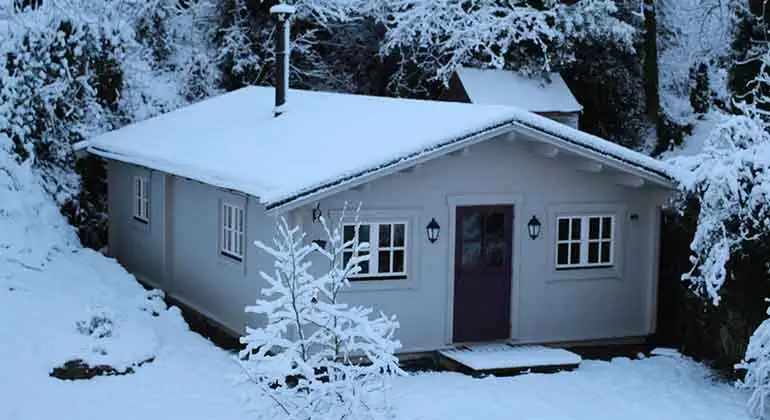
Limerick Scandinavian log cabin in snow

The construction industry is increasingly scrutinized for its environmental impact, particularly regarding the materials used in building structures. Two predominant materials, concrete and timber, present distinct advantages and disadvantages in terms of sustainability. This article delves into various aspects of sustainability in construction, comparing the energy consumption, carbon emissions, and longevity of these materials. By examining these components, we aim to provide a comprehensive understanding of their environmental implications and long-term viability.

The Energy Used in Concrete Manufacture

Limerick Scandinavian log cabin in snow

Concrete is one of the most widely used construction materials globally, and its production involves several stages, including the extraction of raw materials, processing, and transportation. The primary ingredients in concrete are cement, aggregates, and water. Cement production, which is the most energy-intensive part of concrete manufacturing, involves heating limestone and clay in a kiln at temperatures exceeding 1,400 degrees Celsius. This process not only consumes vast amounts of energy but also plays a significant role in greenhouse gas emissions.

Additionally, the quality of aggregates and the method of mixing can influence energy consumption. Modern concrete practices, such as the use of precast concrete elements or ready-mix concrete, may optimize energy use but still rely heavily on fossil fuels during production. Overall, understanding the full lifecycle of concrete production is essential for assessing its sustainability profile.

Laburnum Timber Frame Bungalow
Laburnum Three Bedroom Timber Frame Bungalow

Energy consumption metrics for concrete vary based on the production scale and methods used. According to industry reports, producing one ton of cement can require around 3,000-6,000 megajoules of energy. When considering the entire process of concrete production, including transportation and mixing, total energy consumption can be significantly higher. Comparatively, timber production generally requires less energy, particularly when sourced from local or sustainably managed forests.

Life Cycle Assessment (LCA) methodologies provide a framework for evaluating energy consumption throughout concrete’s lifecycle. These assessments highlight that while concrete is energy-intensive to produce, its durability often compensates for this consumption by extending the life of buildings and reducing the need for frequent replacements.

Impacts of Energy Use on Sustainability

The environmental impacts of energy consumption in concrete production are significant. The reliance on non-renewable energy sources contributes to climate change through increased greenhouse gas emissions. Furthermore, energy-intensive processes can lead to resource depletion, impacting ecosystems and biodiversity. In contrast, sustainable timber production emphasizes renewable energy sources, with many modern mills utilizing biomass energy derived from wood waste, thereby reducing their carbon footprint.

Timber _frames home from Timber Living

To enhance sustainability in construction, stakeholders are encouraged to explore alternative materials, such as recycled aggregates or supplementary cementitious materials, which can reduce the energy intensity of concrete production. Transitioning to greener energy sources in the manufacturing process also presents an opportunity to mitigate environmental impacts.

The Carbon Emissions of Concrete Manufacture

Concrete manufacturing is a significant contributor to global carbon emissions. The primary source of these emissions stems from the chemical reaction that occurs when limestone is heated to produce lime (calcium oxide). This process releases carbon dioxide (CO2) as a byproduct. In fact, the cement industry alone is responsible for approximately 8% of global CO2 emissions. Additional emissions arise from the combustion of fossil fuels used to generate the heat required for cement production and transportation processes.

Moreover, the extraction and upstream processing of raw materials, such as sand and gravel, also contribute to the carbon footprint of concrete. When considering the long-term effects of these emissions, the need for sustainable alternatives becomes increasingly evident, especially in the context of global climate change initiatives.

In a direct comparison, timber generally has a lower carbon footprint than concrete. Timber, when sourced from sustainably managed forests, can serve as a carbon sink throughout its growth cycle, absorbing CO2 from the atmosphere. This characteristic allows timber structures to potentially offset some of the emissions associated with their production and use. However, this benefit can be negated if timber is sourced unsustainably, leading to deforestation and increased carbon emissions.

Quantifying the carbon emissions of both materials reveals that, while concrete has a higher upfront carbon cost, timber has its own set of challenges, particularly in ensuring sustainable sourcing and addressing potential emissions from processing and transportation. These complexities underline the importance of responsible material choice in construction.

Long-term Environmental Implications

The long-term environmental implications of using concrete versus timber extend beyond carbon emissions. Concrete structures, while durable, can contribute to urban heat islands due to their thermal mass, exacerbating energy demands for cooling. In contrast, timber offers better thermal insulation properties, potentially leading to lower energy consumption in buildings. Moreover, timber’s biodegradability and potential for recycling can reduce waste and promote a circular economy in construction.

Ultimately, the environmental implications hinge on various factors, such as building design, lifecycle management, and local environmental regulations. It is essential to evaluate these elements to make informed decisions that align with sustainability goals.

The Sustainability of Managed Forestry for Construction Timber

Principles of Sustainable Forestry

Sustainable forestry practices are crucial for ensuring that timber production does not compromise ecological integrity. These principles include maintaining biodiversity, protecting water resources, and ensuring that forest regeneration occurs at a pace that matches consumption. Managed forests are typically certified by third-party organizations, such as the Forest Stewardship Council (FSC) or the Sustainable Forestry Initiative (SFI), which establish guidelines for ecological and social responsibility.

Certifications play a vital role in consumer awareness, fostering an understanding of what sustainable forestry entails. They help ensure that timber is sourced from forests that adhere to strict environmental management practices, thus minimizing the ecological footprint of timber products and promoting long-term sustainability.

Benefits of Timber Sourcing from Managed Forests

Sourcing timber from managed forests offers numerous benefits, including enhanced biodiversity and the preservation of natural habitats. Responsible timber harvesting practices allow for selective cutting, which can promote forest health and regeneration. Additionally, sustainable forestry contributes positively to local economies, providing jobs and supporting community resilience.

Furthermore, timber from certified forests often comes with a reduced carbon footprint due to minimized transportation needs and lower energy consumption in processing. By prioritizing timber from sustainable sources, the construction industry can significantly lower its environmental impact while supporting responsible land stewardship.

Challenges in Sustainable Timber Practices

Despite the numerous benefits of sustainable timber sourcing, challenges persist. One significant issue is illegal logging, which undermines efforts to promote sustainable forestry practices. Illegal timber not only contributes to deforestation but also damages the credibility of legitimate forest management initiatives. Regulatory frameworks and enforcement mechanisms must be strengthened to combat this issue effectively.

Additionally, market demand for timber can sometimes outpace sustainable practices, leading to pressure on forests and promoting unsustainable harvesting methods. It is essential for stakeholders to advocate for responsible consumption and to consider lifecycle impacts when selecting materials for construction projects.

The Durability and Longevity of Timber Frame Buildings

Comparative Durability of Timber vs Concrete Structures

The durability of building materials is a critical consideration in sustainability assessments. Concrete structures are renowned for their longevity and resilience against elements like fire, wind, and water. However, timber structures can also demonstrate considerable durability when treated and maintained properly. Advances in engineered wood products, such as cross-laminated timber (CLT), have enhanced the structural integrity and fire resistance of timber, making it a viable alternative to concrete in many applications.

Nevertheless, the perception of timber as a less durable material persists. The key to ensuring the longevity of timber structures lies in proper design, treatment, and maintenance. When protected from moisture and pests, timber can perform well over decades, significantly contributing to sustainable building practices.

Maintenance and Lifespan Considerations

Maintenance requirements for both timber and concrete vary, impacting their overall sustainability. Concrete, while durable, can suffer from cracking and deterioration over time if not properly maintained. Repairing concrete structures often requires additional resources and energy. Conversely, timber requires regular maintenance to prevent decay and insect damage, although many modern treatments significantly enhance its lifespan and reduce maintenance frequency.

When evaluating the lifespan of both materials, it is essential to consider not just the initial construction cost but also the long-term maintenance and energy consumption associated with each. By adopting a life-cycle approach, stakeholders can make more informed decisions regarding material selection in construction.

Impact of Durability on Sustainability

The durability of a building material directly influences its sustainability. A longer-lasting structure typically results in reduced resource consumption over time, as fewer materials are required for repairs or replacement. Concrete’s durability can lead to fewer disruptions in the construction cycle and minimized waste. However, if timber is sourced responsibly and maintained correctly, it can also achieve impressive longevity and contribute to sustainable building practices.

Ultimately, the choice between concrete and timber should consider not only durability but also the environmental, social, and economic impacts of each material. Engaging in informed discussions and analyses will drive more sustainable practices in the construction industry, leading to better outcomes for both society and the environment.

Conclusion

The debate surrounding the sustainability of concrete versus timber in construction is complex and multifaceted. While concrete is energy-intensive to produce and a significant contributor to carbon emissions, it offers durability and longevity that can mitigate some of these impacts. Timber, on the other hand, presents a lower carbon footprint and encourages sustainable forestry practices, but its durability depends heavily on responsible sourcing and maintenance.

As the construction industry continues to evolve, it is crucial for stakeholders to prioritize sustainable practices and materials. A thorough understanding of the environmental impacts associated with each material, alongside advancements in technology and sustainable practices, will inform better decisions that align with global sustainability goals.

FAQs

What is the main environmental impact of concrete production?

The primary environmental impact of concrete production is its significant contribution to carbon emissions, accounting for about 8% of global CO2 emissions due to the heating processes involved in cement manufacturing.

How does timber contribute to sustainability?

Timber contributes to sustainability by serving as a renewable resource, acting as a carbon sink during its growth, and promoting biodiversity when sourced from sustainably managed forests.

Posted on Leave a comment

Log Cabin Ghost Story

Log cabin ghost story

Johnny and Mary leave the house with their coats zipped up to the neck and cautions from
their mother and head up the road to Ms. O’Brien’s house. At the chorus of “Trick-or-Treats!”,
she ushers them inside to the fire and offers them a slice of báirín breac each.  
“Well lads, how are ye? How’s your mother?”, Ms. O’Brien asks as she bustles around the
kitchen. The children mumble vague assurances of their family’s health as the kettle boils
and the cake is cut.  

Limerick Scandinavian log cabin in snow

The Banshee…

“Now isn’t this lovely? Jaysus sure it’s much better to be in than out there. I can hear the banshee whistling through the trees, can’t you?” the woman grins at them with a glint in her eye. “I was going to tell ye a log cabin ghost story, but… Did I ever tell ye the tale of the oul’ Banshee?”

Johnnie and Mary share a glance before shaking their heads.

“Well, this will be a treat so!” she laughs. “It was Oiche Shamna, just like this one. A dark evening, with the wind screaming in your ears and biting at your coats. These two páistí, just like yourselves, are walking through an oak forest, looking for treats. They were so hungry for a treat that they hardly noticed the moon climb high in the sky, as white and shiny as a pail of milk, and the way the trees seemed to shiver with fear… In the distance they saw an ould teachín, a wooden one. Twas dark behind the dusty windows, but for a glint of a stove, and the smoke come haring out of the chimney above. As the two children drew closer to the cottage, the trees seemed to whisper “Go back! Go back!”, and the scraggly ravens raced towards the moon, screeching “A-way! A-way!”. But the poor children were too hungry and tired to care, and they knocked on the big wooden door anyways. From inside the cottage a loud groan was to be heard, and heavy footsteps stomped along the old floorboards- stomp, stomp, stomp. Slowly the door creaked open, and the hinges squealed…. and-”

Saved by the bell…

Ding!

Ms. O’Brien jumps back into the present as her phone buzzes. Johnnie and Mary, so invested in the story, blink and try to remember where they are.

Granny O’Brien is calling…

“Let me check this yoke” mutters the woman as she puts on her glasses.
“Well speak of the devil! Granny O’Brien is wondering if I have any báirín breac to spare! Would ye be angels
and bring this up to her? She’s just in the granny flat at the back of the garden. Twas a really handy job- built in a couple of weeks! G’wan so! Lovely seeing ye!”

And with that, Johnnie and Mary are ushered out of the cosy kitchen with a bundle of cake in their arms and their hearts in their throats. They turn their gaze towards a glimmer in the very back of the garden, where a chimney and smoke can be made out. It did kinda look like one of those haunted log cabins…

The children walk under a grove of oak trees, and they can feel the moonlight clawing at them through the branches. All they can hear is the crunching of amber leaves underfoot, and the fluttering of feathers in the dry branches. Slowly, their eyes adjust to the light, and the foster cabin comes into view. It’s a wooden structure, with pumpkins and an armchair on the porch, curtains drawn. Looks like something you’d see in a log cabin village in Scandinavia. Johnnie stares at Mary as she reaches out with a shaking hand to ring the doorbell. It reverberates through the garden, sending the crows high into the sky, and the trembling branches reach a crescendo. The two children squeeze their eyes shut, waiting to hear the creaking floorboards, the looming footsteps and the squealing hinge, when suddenly they are hit with a blast of warmth.

Log cabins aren’t spooky!

“Well, isn’t this lovely! How are ye? Come in, come in, out of the cold! Look at ye, shivering, sure ye must be freezing!” Johnnie and Mary open their eyes in disbelief as Granny O’Brien hurries them inside to the stove, chatting about hot chocolate. 
“Well, what do ye think of the place? A gorgeous warm stove, time sensitive lighting, spanking new floorboards made from the finest Norway Spruce and smashin’ double-glazed windows. Not a draught in sight!

What’s this? Báirín breac? I love báirín breac, so I do!”

Well, the kids weren’t looked up in a cage or fed to a giant ogre. There was no cauldron filled with frogs legs soup, or funny looking bottles filled with potions and poultices.

“These log cabins aren’t spooky at all, so they aren’t”, says Johnny to his sister on their way home. “They’re just well-built, easy to heat, long-lasting alternatives to conventional, overly-expensive construction methods!”

Just then a black cat jumped out from under a blackthorn bush, glared at them through it’s yellow, piercing eyes and HISSSSSSSSSED!

black cat

The children ran home as fast as their legs could carry them!

Posted on Leave a comment

What to look for When Buying a Log Cabin

Buying a log cabin with a deck

Buying a log cabin can be an exciting path, but also quite a difficult one. There are a lot of companies out there with low quality materials and relatively little experience in the field. If you’re buying a log cabin from a log cabins Ireland company which has not been in business more than a couple of years, you can assume they are jumping on the log cabin bandwagon. Ask them how much experience they have in buying and constructing log cabins – who supplies them their log cabins, and how long they are guaranteed for.

Buying a log cabin with a deck

What deposit should I pay?

There are companies out there that are looking for 50% upfront payments from someone buying a log cabin. This is TOO MUCH! We have heard horror stories of people paying huge amounts of money to young, struggling log cabin companies, and losing it all as the company goes bust. Or worse, where the companies are unscrupulous and, shall we say “don’t have the best interests of their customers buying a log cabin at heart…”

So, whether you’re buying a log cabin – looking for a one-bedroom granny flat, a two bedroom log cabin or a larger three bedroom log cabin, keep these tips in mind.

Top Quality Materials

When buying a log cabin, the most important element in that cabin is the timber itself. Most decent log cabins in Ireland are manufactured in the Baltics, Estonia, Latvia, Lithuania, or the Scandinavian countries – Sweden or Norway usually, or Finland. That is because there is a history of log cabin manufacture, building and living in this region. All of the expertise of centuries of forestry, logging and cabin construction are handed down to the log cabin industry in this region. So when we import for someone buying a log cabin, you are buying tradition too. And a lot of our builders come from this region, and from families who have been builders for generations. There is NOTHING our guys don’t know about building the best, longest-lasting log cabins. So when you’re buying a log cabin from Timber Living, your buying tradition and centuries of know-how too!

Blog Post: What timber should a log cabin be built with?

Have a read of our blog post about the timber used in a timber living log cabin here: What Timber Should a Log Cabin Be Built With?. It’s very interesting reading for anyone buying a log cabin.

Quality Double-Glazed Windows

Log Cabin Windows

What do we need in a quality window when we’re buying a log cabin? Of course, it needs to be double-glazed. And a good gap – at least 12mm, between both panes, is a must. But what about the frames? We offer both timber and uPVC frames in our windows and doors. The timber windows look great, especially from the interior. But the uPVC windows of course take less maintenance. It’s a conundrum, but can be easily solved by using a coloured uPVC to add that extra bit of character to your cabin. Whichever you choose, you can be sure of market leading windows and doors from Timber Living.

Blog Post: Which windows for your log cabin?

Have a read about log cabin windows and doors in our blog post: Which windows for your log cabin?

Log Cabin Roof Cover

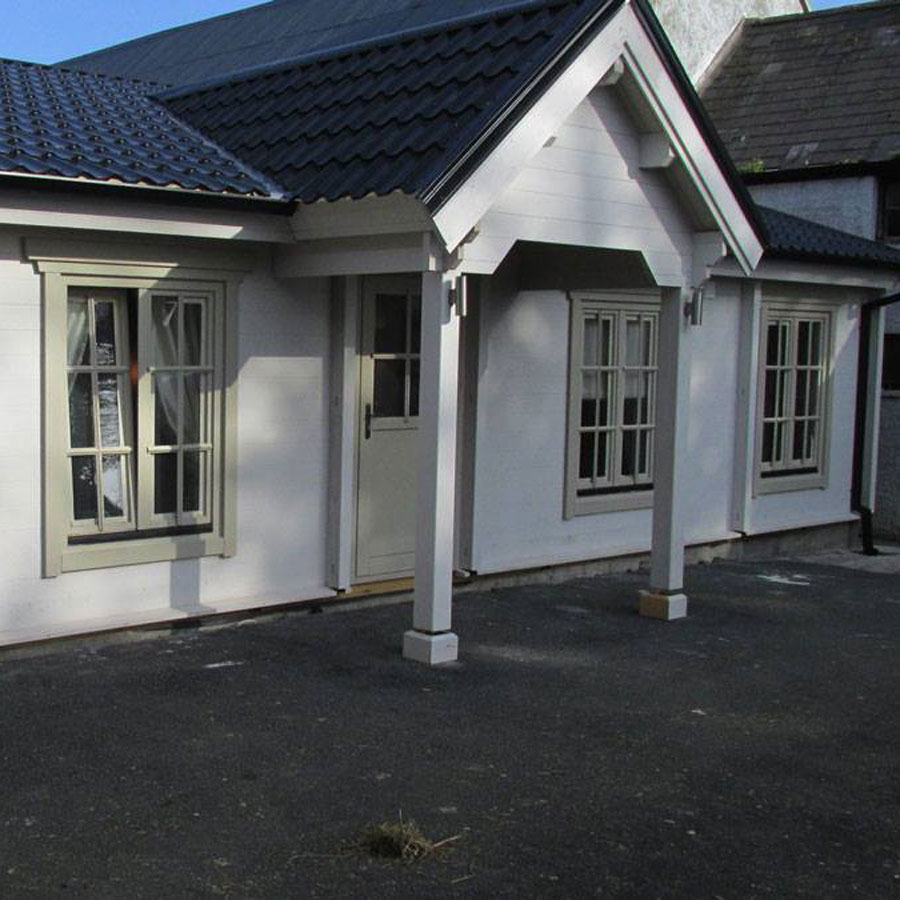
The roof cover on your premium log house is crucial to your log cabin’s longevity. A poor roof is going to let water in, and once that starts, you are in a lot of trouble. That is why we use a pressed-aluminium, tile effect roof. Because it is aluminium, it will not rust. And because it comes in large panels, it is fitted reasonably speedily, reducing overall costs to the client.

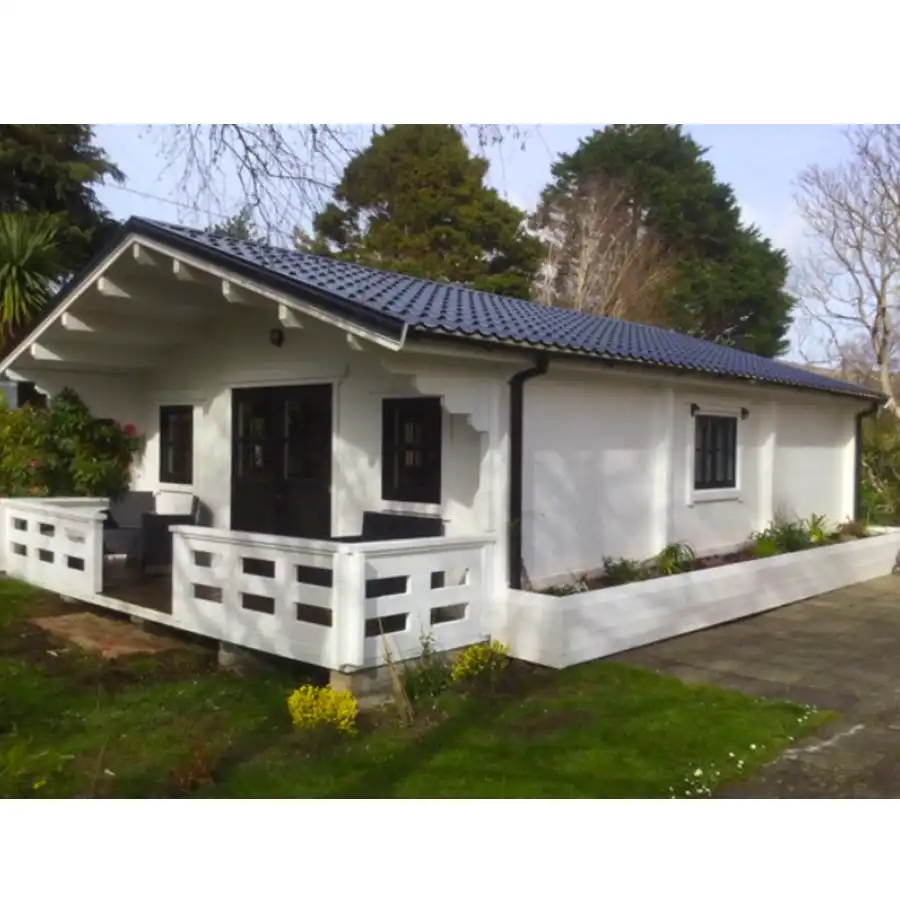
a white log cabin with a black roof

Log Cabin Size – number of bedrooms

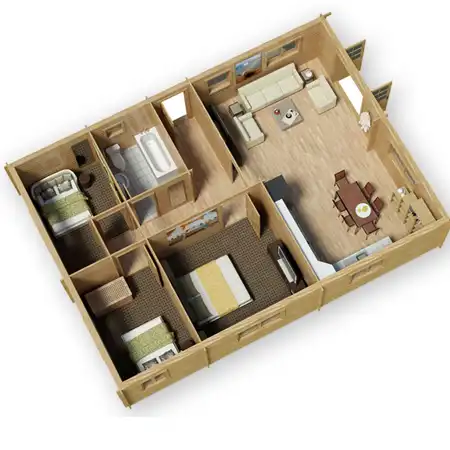
It might sound a bit too simple, but we mention number of bedrooms, because sometimes people look for more bedrooms than they need when buying a log cabin! This is mainly the case in two bedroom log cabins, built for a single occupant. The customer deciding to allocate a full room of the log cabin to someone who might visit two or three times a year! That is very cabin logonomics! Better to set up this room as an office or crafting room, and buy a quality folding couch, transforming the spare room into a visitor’s room for their short stay!

Looking for a granny flat?

If you’re looking for a granny flat, and facing the conundrum of the second bedroom, why not read our blog post: Granny Flat – a log cabin is the perfect solution.

3D plans of 3 bed tullow log cabin

Looking to build your log cabin in a hurry?

If you’re in a hurry to build a log cabin, we have a number in stock, which can be built within six weeks, if necessary. Just take a look at our In Stock page to see what’s available in a hurry.

Nationwide Service

No matter where you are in Ireland, if you’re buying a log cabin, we will be happy to supply you. We have showrooms all over Ireland, including Boyle, Co Roscommon, Tullow, Co Carlow and Carrigaline in Cork. No matter what your question is, don’t hesitate to contact us and we’ll be happy to help you with your enquiries.

Posted on Leave a comment

log cabin walls construction

We offer different types of log cabin walls construction, depending on your needs.

  • Log cabin with timber exterior
  • Log cabin with rendered cement board exterior
  • Timber frame wall construction
Full Wall

Types of log cabin walls

Our standard log cabin walls are overall 7 inches thick with 100 millimetres or 4 inches of insulation, making them wind and watertight. This can be built with either timber on the exterior or cement board. If you use cement board on your exterior you will need your builder to skim that. We will also be finishing with facia and soffit board, which will take away the original log cabin look and make your build a lot more conventional looking.

Log cabin walls – cement board

Here’s a video showing you around a log cabin with cement board log cabin walls finish. This is a great project because it’s actually a barber shop. This premises was finished at a very affordable price and as you can see is an excellent example of what can be done when using versatile log cabin walls construction.

Barber Shop log cabin walls

Timber Frame Construction

log cabin walls timber frame construction

If you decide to go for planning and a mortgage, you will need to use our timber frame option. This timber frame option obviously costs more as there are more elements to the build, but this can still be completed within four months of order. They are fully compliant with building regulations and will keep your planners happy.

Timber Frame Variations

We have different versions of timber frame walls construction, including conical tongue and groove, but we can clarify all of this with your engineer when it comes to pricing and construction.

Another Timber Frame variation
Learn more about timber frame options

We have a range of timber frame bungalows which you can view on our website. There is also a brochure detailing all the technical information in relation to the timber frame cabins which will be a very good starting point for you on your journey to building your dream home.

Posted on Leave a comment

We have a new Log Cabin Videos Team

Timber _frames home from Timber Living
Abbey making one of her log cabin videos outside one of our timber frame homes

Log cabin videos, and timber frame videos too

We now have two Instagram pages:

In this video, Abbey is taking a walk around one of our fine three bed log cabins.

Tony and Maggie tell us all about how happy they are with their timber frame building and their experience building a log cabin with Timber Living. One of our favourite log cabin videos!

Take a look at this Panorama Cabin with Cement Board finish, used as a business premises in Portlaoise.

Posted on Leave a comment

Residential Garden Cabins

Kaprun residential Garden Cabin

A small change to the rules

Comfortable residential garden cabins
Cosy residential log cabins

According to a recent think tank, a “small change to the rules” that would let people build residential garden cabins as dwellings in their gardens would result in the addition of 350,000 housing units.

In order to facilitate the construction of garden “seomraí” or granny flats or residential garden cabins, Progress Ireland is requesting that the government amend the planning regulations.

As of right now, individuals are allowed to construct offices or workshops in their backyards, but not new residences.

“All around the country, you’ll see structures erected in gardens,” spokesperson Seán O’Neill McPartlin told Newstalk Breakfast.

“You’ll see home offices, studios perhaps, underused gyms.

“So, what we’re proposing is, where before you were allowed to build these structures, homeowners will instead be allowed to build small homes.”

This is a “small change to the rules,” according to Mr. O’Neill McPartlin, but considering how serious the housing situation is, it makes a lot of sense.

200,000 housing deficit

The Housing Commission claims that Ireland is currently experiencing a 200,000 house deficit and a lack of brownfield land in places where housing demand is highest.

Backyards and progress are two things that Ireland’s towns and cities are not lacking. Ireland believes that restricting development is absurd given that the government’s aim is to expand the supply of dwellings.

“There are restrictions on what they call detached habitable rooms,” he said.

“So, once you make the dwelling in your back garden a home with a separate entrance, then the development plan says, ‘It’s not exempted, it’s not allowed.’”

All you need in a residential log cabin
Space and convenience
Spacious log cabin kitchen
Warm, easy to heat log cabin
Contemporary style log cabin
Cosy Log Cabin Kitchen
Home sweet log cabin home

“No bigger than are currently permitted”

Mr. O’Neill McPartlin reassured those who were concerned about substantial constructions appearing out of nowhere in their neighbor’s backyard that there was no justification for these developments to be larger than already-existing buildings.

“We’re proposing that we… don’t increase the scale of exempted developments,” he said.

“We’re not proposing that now, all of a sudden, you’ll see structures that are huge erected in back gardens.

“From the point of view of neighbours, the structures erected under our proposals will be no bigger than are currently permitted.”

Down One Bedroom Log Cabin
Down One Bed Log Cabin
Brittas One Bed Granny Flat
Cute and Cosy – Brittas One Bed Log Cabin
Wexford residential garden cabin
WEXFORD One Bed Garden Cabin
Roscommon Log Cabin Black and white
Roscommon spacious one bed cabin
Arklow
Arklow One Bed
a wooden house under construction
Mayo One Bedroom Log Cabin

Downsizing

According to Mr. O’Neill McPartlin, those who are now residing on the property will probably gain from the rule change.

“I think a lot of the cases of these new homes will come through people downsizing from their existing home, from young people living with their parents perhaps moving into the back garden,” he said.

“In other words, there wouldn’t be any additional strain on local infrastructure; there’d be people moving from the big house into the small house.”

Current Regulations

As long as it is no taller than four meters, you are permitted to erect a garage, shed, greenhouse, or other comparable structure under the current planning system.

It must also be at the side or back of your home, and it cannot be more than 25 square meters.

Supported by the billionaire Collison brothers, John and Patrick, who founded Stripe, Progress Ireland is a new think tank.

Its goal is to create “workable solutions” that will boost the country’s infrastructure delivery and housing supply.

Give character to your residential garden cabin

Your residential garden cabin can have lots of character. After all, you’ll be starting with a blank slate!

Our One Bedroom Residential Garden Cabins

Posted on Leave a comment

Follow our Instagram timber_frames posts

Timber _frames home from Timber Living

Have you seen our new Instagram page (timber_frames) dealing with our fabulous timber frame buildings? Our timber frame buildings are excellent if you’re looking for a cost effective, easy to heat, quick to build, sustainable and long lasting residence.

Subscribe to timber_frames

We have a new team of content creators, developing great video and images of our timber frame buildings. If you are interested in timber frames, be sure to log on, take a look and subscribe. You’re going to learn an awful lot about the benefits of timber frame and the reality of building cost effective home which you can be proud of and very happy in.

timber_frames kitchen interior

timber_frames are very affordable

Probably the most important question you’ll have about timber frame is the cost, and we can assure you of excellent price compared to anything else on the market. Get your QS to call us I will show you why building with timber frame from timber living is going to save you a lot of money and time.

Easy to heat

Timber frame buildings are very easy to heat because of their lightweight construction, potential for air tightness and high levels of insulation. All of these are detailed in our brochure which is available on the timber frames page on our website.

living room in timber_frames house

Quick to build

You might be amazed at how quickly a timber frame building can be built. Once your foundation is put in all the fast elements of building can be instigated. And the really cumbersome work of building block can be avoided altogether. And of course a faster build hugely reduces the labour cost of a timber frame build.

Sustainability

In this day and age most people are very keen on sustainability, whether it’s in clothing, food production, transport or house building. And with timber frame, there is no more sustainable method of construction.

Want to know more?

If you’re interested in knowing more about our very affordable, high quality timber frame constructions, please contact us at any of our show houses and organise a visit. Will be pleased to go through all the details from planning, through to construction.

Posted on Leave a comment

How to avoid log cabin problems

a wood post on a concrete surface

Building a log cabin or any timber structure, if done right, can give you a very special building, nice to look at, easy to heat, and long lasting. But if you don’t build correctly, you can encounter a number of different (and easily avoidable) log cabin problems. Watch the video then read on…

3 key tips to avoid log cabin problems

If I had to give three primary pointers for avoiding log cabin problems, the are as follows:

  • Get the foundations right
  • Treat the walls
  • Roof cover needs to last, and do its job!

There are a lot of things about log cabins that people in Ireland don’t know. This is understandable because we don’t have a history of building log cabins in Ireland. But I think it’s unforgivable that someone who sells a log cabins can make such fundamental mistakes as I have seen in this business over the last couple of decades.

I have seen I have seen single wall log cabins sold to people as residential units. This is unforgiveable and crazy. You need to have a double wall construction in order to ensure there is no dampness in the living space of the log cabin. I’ve also seen the same cabins with Rockwool insulation in the floors. Again, an unforgivable error. This rockwool insulation gets extremely damp and soaks up moisture, killing the insulation qualities and leading towards serious rot.

But log cabins and timber homes can last beautifully if they’re built properly and cared for. The timber home in the picture below is over 60 years old and is still lived in today. This is located not too far from our Boyle show house. It is the old Golf Club house and a fine example of how a well-treated timber home can last for decades.

60 year old timber home
Sixty year old timber home, properly cared for and lasting beautifully.

Get your log cabin foundations right.

Water is the main source of log cabin problems. It’s really important that you never have a log cabin or a timber structure sitting in a puddle. I know they build boats out of wood, but water is the log cabins chief foe. I’ve seen garden cabins built on patios for the walls are sitting in a pool of water half the year around and those walls will start to billow and bend and rot within a couple of years…

Here’s a link to our blog (log cabin foundations – what’s best) that explains how log cabin foundations are built.In the blog we specify log cabin foundations for single wall and double wall cabins. We also explain our process in delivering drawings to your builder and how we ensure that your builder builds the correct foundation for your log cabin.

The video below is an excellent explainer as to how a proper foundation or base for a log cabin should be built. Note that the base is actually 20 mil smaller then the log cabin so that the log cabin actually overhangs the base. The purpose of this is to ensure that there is no possibility that your luck happened will end up sitting in water. This is a key factor in ensuring the longevity of your log cabin.

Avoid log cabin problems with correct log cabin foundations

Proper treatment of all exterior wood

paint or stain a log cabin
Should I paint or stain my log cabin

If you want your log cabin to last and avoid common log home problems, it’s important to treat the exterior timber with the right materials. Two coats of a clear preservative initially and then a quality stain (NOT PAINT!). Sikkens Is our favoured product for this purpose. You can get a wide range of colours including natural oaks and Pines, blues graves and oranges – whatever you are looking for. Here is a blog post explaining the benefits of proper staining of your log cabin. https://timberliving.ie/how-to-paint-your-log-cabin/

Roof Cover

Of course, your roof cover is one of the most important elements of your log cabin. You need roof cover that is going to last for the duration. Using felt is a nonsense really in this country. Ten years, maybe 20 if you’re lucky and you will have to change it. Don’t waste your time or your money.

At timber living we use a pressed aluminium tile effect roof. This roof will last for the duration of your cabin. There is No Fear of it getting wind damaged. We have built a cabin on the Aran islands and it is still roofed after a decade of wild Atlantic winds!

Although you could buy tiles for cheaper than this roof cover, there is a cost in installing the tiles. While this cover is expensive, it is the best option for longevity.

OK, not technically a log cabin…

I came across this timber structure in the Netherlands last year. Although it is not technically a log cabin, it is a timber building and it illustrates the important elements God have been outlined above, namely walls not sitting in water, properly treated timber and decent roof cover.

dutch cabin
Posted on Leave a comment

Building timber frame?

Considering building timber frame?

Building timber frame

Considering building timber frame for your new house? About 50% of new houses in Ireland are timber frame. And timber frame is becoming more and more popular be cause:

  • it is a cheaper method of building.
  • Building timber frame is a lot quicker than building with block
  • The site impact of a timber frame house is less
  • Building timber frame makes achieving a higher BER lot easier.

Is building timber frame sustainable?

People worry about timber frame in Ireland because we are not familiar with the technology. But because we are not familiar does not mean that it is bad technology: it just means that we’re not informed enough about the benefits of building timber frame. Timber frame houses are built all over Europe and the United States. If we take a look at scotland, which has a climate very similar to ours we can see how popular building timber frame is.

Timber Frame Bungalows

Estimates suggest a very high percentage of houses in Scotland have timber frames, somewhere between 80% and 88% for new builds. Here’s a breakdown:

  • Data suggests over 80% of new builds in Scotland are timber frame (sources like NHBC and government reports).
  • Some sources claim the number could be even higher, reaching 83% or 88%.

Scotframe, a leading supplier of timber frame kits, states that 83% of the housing market in Scotland utilizes timber frame construction.

Benefits of building timber frame

Timber frame houses offer a number of advantages over traditional construction methods like brick and block. Here are some of the key benefits:

Speed and Efficiency:

a floor plan of a timber frame house
  • Faster construction: Timber frames are prefabricated off-site, allowing for quicker assembly on-site compared to traditional methods. This can significantly reduce build times, potentially by up to 50%.
  • Reduced labor costs: With faster construction, fewer workers are needed on-site for longer periods, leading to potential cost savings.
  • Less site disruption: Prefabricated sections minimize on-site work, leading to less noise, dust, and disruption to the surrounding area.

Environmental Friendliness

a timber frame bungalow with a patio and trees
  • Renewable resource: Timber is a naturally renewable resource, making it a more sustainable building material compared to concrete and steel.
  • Reduced carbon footprint: Growing trees actually absorb carbon dioxide, making timber a carbon-negative material during its growth cycle.
  • Energy efficiency: Timber frame houses can be highly energy efficient due to their excellent insulation properties. The cavity walls allow for thicker insulation layers compared to traditional methods, leading to lower heating and cooling costs.

Design Flexibility

  • Diverse architectural styles: Timber frames can be adapted to various architectural styles, from traditional to contemporary, offering design flexibility.
  • Open floor plans: Timber frames can easily accommodate open floor plans with large spans due to the strength-to-weight ratio of the material.

Other benefits:

  • Lightweight construction: Timber’s lighter weight reduces foundation requirements and overall building weight, making it potentially suitable for certain soil conditions.
  • Improved health and safety: Timber frames are generally considered to be a safer construction method with less risk of on-site injuries compared to heavy masonry construction.
  • Potential for lower lifetime costs: The combination of energy efficiency, reduced construction time, and potential for lower insurance costs could lead to lower lifetime ownership costs compared to traditional builds.
Ashton Timber Frame Bungalow

Overall, timber frame houses offer a compelling option for those seeking a faster, more sustainable, and energy-efficient building method.

We have an excellent range of 4 quality timber frame homes which are fully priced for you to view and consider. Please take a look here at the Linden, the laburnum, the Ashton and the OakRidge. We have designed these four bungalows to suit the demands of the market today. We can also produce frame homes to passive standards. With our experience in building log cabins we can produce and build timber frame homes to passive in excellent short time and at the best market price. Take a look at the web pages for these bungalows and you will see the full range of what we offer for the price, and also a list of what you need to do outside of our price. We have done our best to help you fully price your overall build and consider timber living as your supplier. Talk to us if you are going for a mortgage on a timber frame.

Building Timber Frame – Technical

What’s included:

  • Walls; External & internal; including all timber frame, insulation, felt membranes, cement boarding externally, plaster board internally & window sills; U = 0.15 (m2K/W)
  • Roof & ceiling timber, with insulation, felt membranes, outer roof cover, inner plaster board, upvc soffits & fascias, gutters & down-pipes; U = 0.16m2K/W)
  • Windows & external doors; double glazed upvc U = 0.14 (m2K/W)
  • Damp proofing
  • Fixings securing building to the base
  • Delivery & Build on pre-prepared foundation base.

Project does not include:

  • Base & Finished floors
  • Internal/External Plaster Skimming
  • Electrics
  • Plumbing & Heating
  • Internal Joinery
  • Kitchens & Sanitary Ware

While building timber frame is a lot more technical than building with block, it comes in a lot cheaper because of labour costs. Cost of hiring someone to lay block on block unblock to build a house is huge compared to the erection of timber frame walls. And of course the length of time that it takes to build with block will have a serious impact on the completion of the project. Financially, the waiting time for your new house is going to cost you money in rent and bridging loans amongst other things. And then there is the difficulty of quotes and financing. You get a quote for a kitchen at the start of a block built building and by the time the building is ready for the kitchen (say 18 months later) the kitchen has gone up by 20%.

Timber Frame Technical wall section
Details of construction of A2 Timber Frame Wall