Posted on Leave a comment

Log Cabins and Climate Change

Log cabins are ideally positioned to make a great contribution in the battle against climate change, if only the planners would accept them. And in some cases they are accepted by planners. There is nothing more sustainable, no method of building more environmentally friendly than building homes with timber.

Concrete block buildings have a huge carbon footprint. There is an enormous amount of energy that goes into creating the cement which is used in turn to create the blocks. There is the extra energy used in transport of the materials to factories for processing, and then to the site for building. Add in the energy used in handling all of the materials on site too, and the carbon dioxide emissions levels keeps on building up and up. And wherever there’s concrete, you’ll find steel too. And the energy used (and the ensuing emmissions) are huge for the steel industry.


On top of all the emmissions due to the large amounts of concrete and steel used in the building, we ned to factor in the fact that such a heavy weight building requires a much bigger foundation, also made of lots of concrete and steel. Oops! More emmissions! Really, its a bonkers way to build, when you think about it…


Log Cabins – Environmentally Friendly Homes

The beauty of log cabins when it comes to climate change, is the fact that when the trees are growing theygrow on carbon – they take carbon in from the air as they grow, thus helping to mitigate the effects of climate change. And as the log cabin industry cevelops and grows due to market demand and (hopefully) more cabin friendly regulations) the producers will be encouraged to grow sustainable forests, in order to provide trees for the industry long in to the future.


In truth, the Russian forestry industry has been operating on a sustainability moel for over a century, always planting trees to replace trees that have been felled to produce new products. Its great to hear that such foresight and common sense has existed for so long, and that we are benefitting now, since the Russian forests are still available to us, and have not been farmed out of existence!

Log cabins – good for the environment

Log cabins – the environmentally-friendly choice

Because Timber Buildings weigh 20% of the weight of concrete buildings, there is a huge reduction in the required concrete Foundation. Wood also replaces steel in log cabin homes – another reduction in the fossil fuel used to create the residential log cabin.


Roof tiles – another factor that people forget about. If you want (say) blue bangor roof tiles on the roof of your home, that’s the weight equivalent of putting a car on the top of your house! This requires much stronger roof support, stronger walls and a stronger foundation – all of which increase hugely your house’s carbon footprint. So much cheaper and easier, and lighter, but just as insulating, to use single roofing panels. And less chance of losing a tile in the next storm!

Unbelievably, concrete is responsible for up to 8% of global carbon emissions. It is the second most abundant material on Earth, after water! And it has a huge environmental impact. It’s hard to believe that a cubic metre of wood contains the equivalent carbon of 350 litres of petrol, but it’s true. The more of this type of information that people can learn about timber, the better off we will all be. It has been found buy a study in the UK that the use of timber in buildings is the greatest opportunity for greenhouse gas abatement in a low carbon economy, since the wood replaces steel, concrete and brick. Have a read of this article from the BBC: Could wooden buildings be a solution to climate change?

Many epople will tell you that there is a strong concrete lobby in the country, which is working against the construction of residential log cabins. Of course the Construction Industry should work to protect their members rights, but in this era of climate emergency, don’t we all have an obligation to look for opportunities to change our ways in order to help the environment? Homes will still have to be built – maybe its time to look seriously at building all of our buildings – not just homes, from timber? If we get into this timber building industry now, we could lead the field and supply Europe with materials, expertise and technology – the market is there, developing rapidly and waiting.

What an opportunity for the Government! If only the government could wake up to the huge benefits of these fantastic timber homes. Seize theday! .

Log Cabins Range

So, whether you’re looking for a one bed granny flat, a two bed garden chalet, or a 3 bed log cabin home, you you can enjoy the fact that your log cabin is so environmentally friendly. Of course we also produce bespoke log cabins, if that is what you are looking for.

So why not give us a call at one of our showrooms in Tullow, Carrigaline or Boyle? You’ll get all of our details on our contacts page.

Posted on Leave a comment

Heating a Log Cabin

it’s a picture most of us dream of – sitting in a comfortable sofa, by a log burner, in a stylish log cabin home. But are log cabins easy to heat? Like any building, as long as they are well built, well insulated and draught proof, you should have no problem heating your new log cabin.

Is a log cabin easy to heat?


Log cabins, built of quality timber and well insulated, are very very cheap to heat. That is as long as they are well built, with quality windows, doors and insulation.


If you think about it, there is only one key difference between heating a block built house and heating a log cabin. In both cases, you have an interior space that has to be heated. In both cases, you have a floor, walls, windows, doors and a roof that create the building envellope. So really, if the insulation levels and the draught proofing are the same in both buildings, you could imagine that the same amount of heat is required to heat the space within.


Are Log Cabins easier to heat than block buildings?

The main difference between the two types of building – log cabin and block built – is the timber surface on the interior cabin. Think about the amount of heat that a block and plaster wall requires in order to heat it up, and how long those walls will be drawing heat out of the room, while the equivalent timber walls are actually acting as an insulator, and doing nothing to keep the room chilled!


Log Cabin Heating Systems

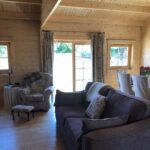
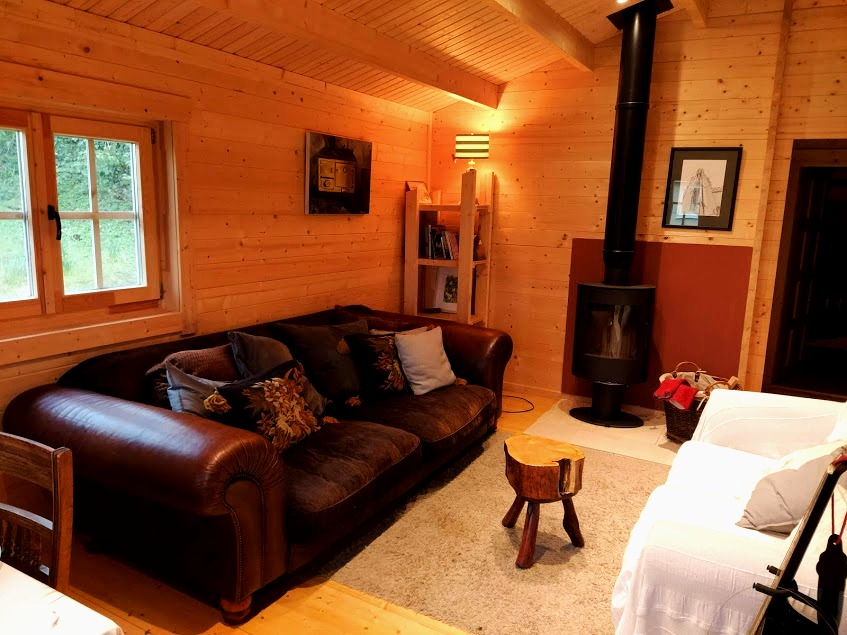
The picture above shows a very cosy scene – actually, this is the log cabin showhouse in Boyle – the Limerick Log Cabin – with its wood burning stove. But of course you do not have to use a solid fuel stove to heat your log cabin. You can heat a log cabin in the same way as you would heat a conventionally built house. So yes, you can use a log burner or solid fuel stove. You can put a back boiler onto it, no problem. You can use a natural gas stove or boiler. And of course you can use an oil boiler – why not?

There are a lot of options nowadays with electrical heaters – wall panel, radiant, with all sorts of timers and heat sensors built-in. And if you want to be very daring, you can put in underfloor heating. Why not have an air to air heat exchanger built in? All of these options are endlessly possible.


Single or double wall in your log cabin?

This is a very important question, if you’re planning to buy a log cabin. Single walls, which are available on the market from 40mm up to about 90mm, are ALWAYS insufficient if you’re using your log cabin for residentioal purposes. This is because if you are heating your cabin regularly on colder winter nights, the temperature of the cold damp air will be too low, and the wall thickness is not great enough to insulate your cabin. In other words, the interior of your wall will be chilled be the cold exterior. Why is this important, you may ask. Typically what happens with a single wall cabin at night, if you’re heating the interior on those nights, is that you will feel warm in your cabin. BUT, the covered wall areas, behind presses, wardrobes, pictures etc, will not be warmed by the heating in the log cabin, because the warm air won’t readily circulated behind these fittings. So, the air that is behind these fixtures remains cold, and, as the walls cool due to the low exterior temperatures, the moisture in the air will condense, and this is how mould forms. The unfortunate thing is that this only happens on hidden surfaces, and it is usually not noticed for a long time, when so much damage is done that it is too let to remedy the situation.


Double glazed windows and doors

There is no doubt that double glazed windows are an important element in keeping your log cabin warm and easy to heat. Make sure the windows supplied in your log cabin are up to European Union specifications. At Timber Livng, wer offer a number of different window choices. Read the Blog Post here: Which windows for your log cabin?


South facing for solar gain

Remember when siting your log cabin, that there’s lots of free heat available from the sun, as long as you orientate you log cabin correctly, so that the biggest windows are facing south or south west. Solar gain is a major contributor to reducing cabin heating costs, and its very easy to get this right. Sometimes, you might be unlucky enough to have a stunning view to the north of your building, and you plan to have your main windows facing that direction – but generally, where possible, you should face your cabin southwards.


If you’re looking at planning your heating for your log cabin, it would make a lot of sense come to one of our TimberLiving showhouses in Boyle, Tullow or Carrigaline to have a chat with our ever-helpful sales crew. They would be only delighted to help you with your decisions.

Posted on Leave a comment

How much does a Log Cabin Cost?

The bottom line with any log cabin is that it will be half the price of a conventional, block built building. And of course, there are many other benefits, from a building project point of view, including time and quality control.


TimberLiving Log Cabins will be built a lot quicker than a block built building, because most of the work is done in our high-tech, precision fabricating facility.


Time is a major factor. From date of order, you can expect to be moving into your new log cabin in about three months, compared to a moving in time for block buildings of a minimum of nine months from start of the project. Because our cabins are produced in a factory, and most of the work is automated, the amount of time taken on site is hugely reduced, and reduced time on site means reduced labour costs, and of course, reduced labour costs means reduced bills for the customer. Good news!


Quality Control in Log Cabin Production

Another major benefit of factory produced housing is much improved quality control. Since most of the production work is automated, all of the cutting and profiling is done in a dry, warm factory, where the weather is not causing workers to rush jobs or carry out shoddy finishing of a building element because the rain is coming! The timber we use comes from sustainable forests, and is graded and kiln dried to EU standards, so you can be sure of a cabin that will last for many, many years. And the tilt and turn, double glased windows are also produced to EU standards, with rigourous quality control procedures maintained throughout the production.


So, how much does a Log Cabin cost?

All of our log cabin prices are available on our website, www.Timberliving.ie. ON the site, we give both a flat pack price and a built price. Our built price includes everything from delivery to building to insulation. (Our prices do not include for the building of the base, the installation of electrics, plumbing or heating. And we don’t do the gutters.)

It is important to choose the double wall option, with insulated walls if you are considering a residential log cabin. From an insulation point of view, it is possible to upgrade your insulation levels in your roof, walls and floor.


The simplest way to increase floor insulation is to use thermal load bearing insulating blocks in the base. Wall insulation can be increased in a number of ways. We can increase the cavity size, which means you won’t lose the timber wall look on the interior or exterior of the cabin. Alternatively, you can put extra insulation on either the interior or external wall of the cabin, and then either use plasterboard on the inside, or cement board on the outside of the cabin. Of course all of these options will cost money, so it would make sense to discuss your options with someone at one of our showhouses before you make any final decisions.


When you’re building a log cabin, you will have to calculate for all of the necessary services, including water, electricity and waste water. Often, with cabins built in garden, electricity is not a probelm, as a line can be taken from the existing dwelling supply. But it is also possible (ans sometimes desireable) to get a new electrical connection from the ESB. While this might be expensive, it does solve some potential problems, such as cut out of supply if power showers and heat pumps go on at the same time. It will also solve any problems in relation to who pays how much of each bill! And no, you o not need a planning nmber in order to get a new connection from the ESB.


Septic tank or sewerage connection can be a problem, so you need to find out the capacity of your septic tank, and also be mindful of the levels inviolved if you are running the waste from your cabin into an existing septic tank. Of course there are solutions for these height issues – holding tanks and pumps can be used to solve a multitude of problems – but it is best to talk to an expert in this area.


You wil also have grey water run off from your sinks and shower, and of course, your rain water from the roof has to be drained away.


Hot Water Solutions in Your Log Cabin


the simplest set up for hot water in your log cabin is to use an electric shower and an under counter instantaneous water heater. Of course, you can put in a water tank if you wish, and will need this if you’re going to put in rads, but generally, the power shower and under sink water heater are a great job, simpler to install, quicker, reliable, and a lot cheaper! You should really consider it!


As we say on our site, prices do fluctuate due to the changes in timber prices. so don’t hesitate to ask for our best price when you come to visit our log house showrooms in Boyle, Tullow and Carrigaline.

High Quality Log Cabins at Low Cost

On top of the cost of the cabin, you have to include the following:

  1. 5 inch concrete base

  2. Electrics

  3. Plumbing

  4. Heating

Overall, you’re looking at probably €8,000 to €10,000 of an increase on our smaller, one-bed log cabins, or two bed log cabins. There will, of course be other costs depending on where you are building your own log cabin. You may need an ESB connection, and septic tank, for instance.

If you were going for planning permission for a log cabin, you will have further increases in costs in your log cabin. In order to meet building regulations, you will have to increase the log cabin insulation in the walls and roof of your log house. Wall insulation can be increased by either increasing the size of the cavity in the wall or by using external insulation. Planners may also require you to put an external cladding of cement board.

When dealing with planners never hesitate to remind them that the carbon footprint of a log cabin is much smaller than that of block built.

if you’re looking for more detail about purchasing a log cabin in Ireland, please contact TimberLiving Log Cabins and come and visit us in our showrooms in Tullow, Boyle or Carrigaline.

Posted on Leave a comment

How well are Log Cabins insulated?

Log cabins look cosy and cute and warm. They have so many endearing qualities. They look so inviting: you just want to go in there and sit down by the stove and relax. But do they stay warm for long?

Easy and cheap to heat

You want a warm, cosy log cabin.

At timber living, all of our residential log cabins are very well insulated. We are very proud of the high quality of build of our log cabins. We use only the best materials, and that makes our log cabins reliable, durable and warm.

There are two factors that ensure that a building is

As long as a building has sufficient insulation and is well draught-proofed, heating should not be a major issue. The major difference between a log cabin and a block built building is that the blocks used tend to draw heat out of the rooms, and in effect, they need to be heated sufficiently before the room really feels warm. These cold surfaces will make the room feel cold until they are warmed up themselves. You do not have this issue with timber walls, floors and ceilings.

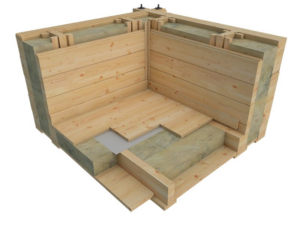
Our log cabin walls are one hundred and seventy five millimetres thick (seven inches). Of that 157mm, you have a 45mm outside timber, a 100 mm cavity and a 30mm inside timber. The outside and inside timber walls also add to the insulating value of the walls. This all means that a log cabin is going to heat up a lot quicker than a block building, its going to feel warmer sooner than a block building, its going to be cheaper to heat and its going to retain its heat longer.

In the showhouse in Boyle, we generally heat the stove until about four in the afternoon on a Saturday. When we go into the showhouse on the following Sunday morning, the temperature is usually a reasonable 12-14 degrees, even though it is 3 degrees outside.


What insulation does my log cabin need?

Our standard insulation levels are 100mm of kingspan insulation in the roof, and 100mm of Metac insulation in the walls, along with 50mm of kingspan insulation in the floor of your log cabin. While building regulations look for higher levels of insulation in all new buildings, we find that our customers have been happy with these standard levels of insulation ever since we started building log cabins in Ireland, over twenty years ago.

That being said, it is not a problem for us at Timber Living to increase the level of insulation in your log cabin, if that is what you require. Increasingly, people are looking for an increase in the wall, floor and roof insulation. This can be done easily, just by increasing the size of the cavity in the walls, and the roof and floor joist sizes too.

Increasing the size of the cavities and joist sizes in your log cabin will put up the overall cost. But there are other ways to increase the insulation – you could put extra insulation either on the interior walls of your cabin, using cosyboard or a combination of plasterboard and insulation, or you could put external insulation , fixed directly to the external log cabin timbers, on the outside of your log cabin.

The simplest way to increase the insulation in your floor is to build an insulated slab, with load-bearing insulating blocks, such as Quinn Lite.


Is Rockwool okay as floor insulation?

There are many new companies selling log cabins in Ireland, and it is natural that they are bound to make mistakes as they learn the intricacies of building log cabins in Ireland. One of the most common errors made by these companies (and one of the most costly to their customers) is the fact that they offer rockwool as a suitable floor insulation. ROCKWOOL IS NOT A SUITABLE FLOOR INSULATION!


I would advise that the first question you ask any log cabin company you are talking to is “what floor insulation do you use?” If they say rockwool or mineral wool, I would suggest that you walk away. The floor insulation is placed on top of a concrete slab, which naturally, gets very cold in Winter. Once the temperature gets below about four degrees, the moisture in the air in Ireland will stat to condense onto cold surfaces (as we all know too well!) So, with a cold slab on a cold winter’s day, you are bound to get dampness. The rock wool will soak up this dampness like a sponge, and loose its insulation qualities. It will also make your rooms cold and introduce dampness to the floor and wall timbers.

We use Polyisocyanurate (PIR) insulation in our buildings to avoid this damp ingress occurring. Polyisocyanurate (PIR) is one of the most efficient insulation material used in construction. Read more about it here.


Are log cabins warm in the winter?

Our walls are double leaf, cavity walls. Our standard cavity is 100mm and that can be increased if necessary, for planning purposes. In those cavities we make sure that we have the best available insulation. We use foil-backed PIR insulation, commonly known as kingspan insulation, in the roofs and floor spaces. This is a very durable, high-quality product that will last certainly the duration of your log cabin. Our windows and doors are very durable, double-glazed units, which will easily keep out Winter winds. All windows are tilt-and-turn, our external doors are five-point locking, and our internal doors all have gaskets (believe it or not) to keep the heat in.

Well-insulated log cabins

Whether you are building a single storey or a two storey log cabin, and no matter how many bedrooms is in your log house, we can assure you that your new home will be very cosy, warm and easy and cheap to heat.

You will see from our website that we offer a huge range of log cabins:

If you are interested in a quality log cabin, log house or timber home you should contact us at Timber Living.

Timber Living Log Cabin Showhouses in Tullow, Boyle and Carrigaline

We have show houses in Tullow, Boyle and Carrigaline. Please feel free to contact us now to make an appointment and come visit us.

Posted on 2 Comments

What do I need to know before buying a log cabin?

If you’re thinking of buying a log cabin, there are a number of questions you need to consider and get answers to before you proceed. That’s why we thought it would eb useful for you if we drew up a complete list of all the things to consider whenwhen buying your log cabin.


Location, location, Log Cabin location

Before you build your log cabin, you’re going to need somewhere to put it! So, where are you planning to build your log cabin? Is your site big enough to fit your log cabin? Remember that you will need a reasonable amount of space between the log cabin and any adjoing walls/hedges in order to get in to treat the log cabin walls. This treatment is required every three or four years, and needs to be done well. If you’re unsure about the space you have, take measurements of the site, and PLENTY of photos, and come visit us at one of our showrooms. We can give you a good idea of what is feasible once we hae the information.


Water and Power Connections

What about water and electrical connections? Are there sources nearby? Often, when people are building near an existing house, (like building a granny flat in the back garden) the existing water connection for the house is easily tapped into. It is usually very straightforward to connect up to the electriccal power for the house too. But there are some cases where you might want a seperate electrical meter. obvoiusly, ythere’s the billing issue. Oftentimes, people want their own independence, and are reluctant to share bills, which is very understandable. It is very straightforward to get a second connection and meter from the ESB, and you do not need planning in order to have one installed.

Another reason for a seperate electrical connection is if you pan to use an electrical power shower and undersink water heater in your log cabin. In this case, if there are alreay a number of electric showers in the existing house, there might me the possibility of your power being tripped, since these power showers use a large amount of power while they’re running. This is not an issue in all houses, so its best to ask your electrician to recommend a solution. And also ask the inportant question – “What are the connection fees going to be?”


You also have to think of the septic tank, or the sewerage connection. Make sure that your cabin is at the right height to connect to these services! There are solutions to this – storage tanks and pumps, but you will need to talk to an expert in this area.


Letting the sunshine into your log home

Orientation is a very important factor for any home, because sunshine brings light, but more importantly, free heat. (Did you know that south-facing houses get a better BER than others, purely because of the fact that they gain a lot of free energy as a result of the solar gain of their south-facing aspect?!) So, when you are choosing your log cabin, always keep in mind the south facing orientation, and don’t forget to consider the hadows from any adjoining buildings. Of course, a log cabin interior cabin be brightened up a lot by painting the interior a bright colour, so all is not lost if you are in shadow.


Click for Log Cabin Finance

A Quality Log Cabin will Last a Lifetime

Whatever you do, buy a log cabin that is built to last. Visit our showhouse and you will istantly experience the sturdiness, strength and security of our log cabins. We use the finest of Siberian-grown Norway Spruce (Read aour blog post about log cabin timber here: https://timberliving.ie/post/what-timber-should-a-log-cabin-be-built-with

We also use high-grade double glased, tilt and turn windows and doors. Read more here: https://timberliving.ie/post/which-windows-for-your-log-cabin


Double or single wall log cabin?

Unless your log cabin wall is over 6 inches thick (150mm) you will need a double wall construction, with insulation in the cavity. Our walls are at least seven inches (175mm) thick, which includes a four inch cavity. If you wish, you can increase the cavity size, or put more insulation on the interior or exterior walls. Talk to us about all of the options.


Financing your Log Cabin

A log cabin is a great investment! Most people have their log cabin paid for with five years rent or less – it’s a no-brainer. But you might not have five years rent saved up under the matress, so you’ll need finance. Your Credit Union is probaby the cheapest place to get finance for your log home, or you could apply to Flexifi (Just click on the image above to get to the application form.)


Is a Log Cabin Cheaper to Build?

Of course, the answer to this question is a resounding “YES!” Log cabins are a lot cheaper to build than conventional block built structures – up to 50% fifty per cent cheaper, by many accounts. The costs are kept down on log cabins by a couple of major factors – labour costs are lower on a build that takes a matter of weeks rather than months – that’s self explanatory. But what’s not so obvious is the fact that the cost of the raw materials is so much lower. A double wall of cement blocks costs a huge amount to produce, because so much energy goes into making the concrete, and energy is expensive these days. Per square metre, a double timber wall, well insulated, is a lot cheaper than the equivalent block wall.


Log cabins are built very quickly


But that’s not the only good reason to buy and build a log cabin. The next main practical reason to build a log cabin is the speed of building. From the date that you first order ypour log cabin to the completion date is on average three months (faster if we have the model you are looking for in stock). Doesn’t three months sound a lot better than twelve months?

Then there’s the extra site damage that comes hand in hand with block building – all that storing of materials on site for months, causing mayhem in your garden! Who wants that?!!


Buying a Log Cabin

So, if you’re buying a log cabin in Ireland, there are lots of questions you need to answer. But the most important question is who to buy from. And we at Timber Living have been supplying log cabins in Ireland for over twenty years. We have sourced the highest quality cabins available in Europe, and we offer them to you, delivered, built and well insulated.


Talk to you soon!

Posted on Leave a comment

Log Cabins – perfect garden offices!

Cosy, compact and cost-effective log cabin garden offices from Timber Living

Insulated Garden Offices

We have the perfect solution for anyone looking for a workshop or garden office. Our log cabins are ideal buildings for all sorts of practical uses, with their solid log construction, quality double-glazing, high-level of insulation – you can create a very placid atmosphere in a timber Living log cabin garden office. Take a look at our Feakle cabin as an example.

Whatever Log Cabin size you want!

We offer all sorts of variations in our garden offices, so you can get EXACTLY the workspace you want, at the best price.

  1. A huge range of sizes, from 3m x 4m upwards to bespoke log cabins

  2. Choice of single or double doors

  3. Double glazing comes as standard

  4. Single wall or cavity wall construction

  5. A range of insulation levels

  6. Log Home Verandah maybe?


Contemporary Log Cabin designs

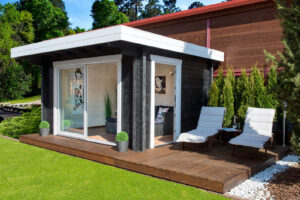
Some people like the more modern, “Shomera” style of cube garden room or garden office pod. If that’s to your taste, no problem! Take a look at our Comtemporary page to get ideas of contemporary designs. And remember that we can build whatever size log cabin you want – you don’t need to go along the traditional route, and neither do you have to pick one of the plans on offer in the website. We are quite happy to build the sie and shape of garden office you want – you just have to come along to one of our showrooms and let us kow exactly yhe details for the cabin you’re looking for, and we will get it priced up in a couple of days.

Contemporary Log Cabin Design

Bespoke Log Cabin Designs

For whatever reason, you may not find what you’re looking for in our wide range of log cabins. Perhaps the space you have available for you to build does not suit the cabins we offer, or maybe you have a particular view, and want to re-configure the windows to facilitate that. There may also be a situation where you need a reception room, changing room, treatment room, or seperate indicidual offfices for different workers. Whatever configuration you need in your garden office, we can supply that for you.


Log Cabin Workspaces

We have produced log cabin offices for lots of different workplaces. You’d be very surprised to see the range of businesses which our cabins are suitable for. Perhap the most unexpected building we ever produced was a changing room and canteen for workers at an abbattoir! I supose that just goes to show that our buildings are ideal for nearly eery situation! Some other previous bespoke log cabin offices and workplaces include:


Physiotherapy and other treatment rooms

We have provided treatment and therapy rooms for lots of different medical practitioners, from physiotherapists to accupuncturists, homeopathists, psychotherapists, mindfulness and meditation teachers, masseurs etc. These garden offices often many different rooms, including a reception area, treatment room, shower/changing room and kitchen.


Log Cabin Office space

Our log cabins are ideal for office space because they are so well heated, can be configured with any number of windows and doors, they are built quickly, and are very easily wired for technology.


Log Cabin Creche

We have supplied creche buildings nationwide. Our cabins create a beautiful, soothing atmosphere which is ideal for a creche. The speed of build is also a benefit for creche companies, which may find they need to expand within three months (as with log cabin buildings) rather than in a year or so, which is how long it would take a block building construction.


How long will a log cabin last?

Of course, if you’re spending money on a building in which you intend to make more money (!), you want that building to last. ANd we always tell our customers that a TimberLiving Log Lcabin will last a lifetime, as long as it is properly maintained. But maintainance of a log cabin is not a huge chore. Not at all! You will need to redo the external finishing every three or four years, depending on how exposed your log cabin is to the wind and rain. We always recommend Sikkens exterior wood stain for our cabin exteriors. This excellent product does a great job at keeping the water out, and also letting the wood of the walls breathe. Its a straightforward application, with a short rying time, cso your log cabin can be done and dusted in a couple of days.

Another secret to keeping your log cabin going over the years is hidden in the way we build our cabins, from the ground up. You require a concrete slab which is shorter by ten millimetres all round than the cabin which sits on it. This ensures that water cannot pool under the cabin, which means the wood cannot rot. An additional safety feature ith regard to this is the throated rain sill which runs all around your cabin at the base of the walls. This throated rain sill throws water off the foot of the cabin, and prevents any pooling at the cabin base. A very important detail in our log cabins!

We also include weather boards at the exterior ends of our overlapping walls. These weather boards ensure that the ends of our horizontal wall drop logs are not exposed to driving rain. If they were exposed to driving rain, there is always the possibility that rain would run along the horizontal joint, and lodge at the wall corners. This is now prevented by the weather boards mentioned above.


If you would like to learn more about our log cabin construction and high build quality, you should come along to one of our showrooms. Just give us a call, or come visit us in Tullow, Boyle or Carrigaline. We’d be delighted to show you around.

Posted on Leave a comment

Get a Log Cabin – best New Year’s Resolution Ever!

Whichever way you look at it, a Log Cabin is a great investment – quick to build, long lasting, easy to heat and a whole lot cheaper than the alternatives.


Beautiful Log Cabin interior

Do I need planning permission for a log cabin in Ireland?

A lot of people as us if planning permission is an issue for their garden log cabin? Did you know that that we have a couple of cabins that are under the 25 square meter planning permission limit? You could take a look at the Brittas Log Cabin, which is the favourite of our customers, or the Down Granny Flat, which is a tad smaller, but still very well laid out. And of course, we have plenty of other sizes, including our very successful two bedroom log cabin range, if you’re looking for something bigger. Just call to any of our showrooms and we’ll be delighted to help.


Log-term Benefits of Log cabins

We have been building log cabins in Ireland for over twenty years, and that is why we’re only too pleased to offer a ten year guarantee with all of our cabins. The quality of the timber used in the cabins (Norway Spruce from Siberia) is so good, that your cabin will last a lifetime, as long as it is well treated. The timber grows very slowly, since there are only three months of real growth per year. This means that the wood-grain is extremely tight, compared to Irish gron timer. Tight wood-grain means no warping, twisting, or bending of the log cabin timbers, keeping your log cabin draught-free and leak-proof for the duration!


Cheap and easy to heat log cabins

Because your log cabin is so well insulated, there will be no problem when it comes to cozyness and heating bills. We use high-quality insulation in the floors, walls and roofs of our cabins, and if you’re interested, we can actually increase the level of insulation. Also, the cabins are relatively air-tight, which means there are no draughts that might take away any heat from inside.


What heating system for your Log Cabin?

You can use any form of heating to warm your log cabin- oil /gas / wood pellet boiler with radiators, stove (with or without back boiler), electric radiators, heat pumps – the list is endless.


Are log cabins built quickly?

Its unbelievable how quickly we can build a log cabin. You could have your cabin built and ready to move in to in four weeks, if you had all your ducks lined up, but it is not unreasonable to expect to be ready to move in to your log cabin after two months.

In week on, we build the outside walls, and in week two we do the insulation and the inside walls. Your electrical and plumbing work is done at the same time, so after two weeks (depending on cabin size, of course) you’re ready to put in your kitchen and get decorating. No bother!


So, why not start the year off properly with a visit you one of our showrooms? Give us a call at 05991 81039, and we’ll organise an appointment straight away!

Posted on Leave a comment

Log Cabin Finance available on our log cabins

Once you’ve seen the wisdom and value in buying a log cabin, you’ll be eager to get going and complete your purchase. Of coure, a log cabin is not a cheap purchase, and most people will have to organise finance for their new log cabin. There are lots of different ways to finance your new log cabin. Credit Unions are a very popular option with a lot of our customers. Another way is through a long term loan from Flexifi. Timber Living Log cabins have teamed up with FlexiFi, who offer finance on our log cabins.

You can apply here: FlexiFi Apply Here

Log Cabin Finance Options

Financing a log cabin is a great idea!Think about it – a two bed log cabin will cost you €28,000 upwards. Now, if you’re currently paying (say) €600 a month in rent to your lovely landlord, that means you’re handing over over seven grand a year, and with nothing to show for it at the end of the day. Fice years rent, in this exampple, is €36,000! Thirty six thousand euro! That makes absolutey NO sense. Imagine the cabin you would have after five years and thirty six thousand euro!

So, we can agree that you’ll easily pay back your log cabin with whatever you’re paying for rent at the moment. But before you jump in and make a purchase, you need to think about the BEST place to get your money.

Where can you get finance from?

Getting finance is never easy, but for a log cabin, it never made so much sense. Building a log cabin is going to cost about half of the amount that a block built house costs, so its a no brainer. And, you’ll pay for your cabin with (probably) less than whatever you’re paying for rent at the moment. Payback might be over 5 years or more, but, its all do-able, and all good. But where to get the finance?

  1. Credit Union (Always the best place to start.)

  2. FlexiFi

  3. Family / Friends. (If you don’t ask, you’ll never know. People are often delighted to be able to help…)

  4. Banks. (Unlikely that you’ll have much success here, but, depending on your standing, you might be able to sort something out.)

Credit Union Finance for Log Cabins

A lot of people have a few misconceptions about Credit Unions, and it is no harm to clear these up for you right now. The most important thing you need to know about Crefit Unions is that:

YOU DON’T NEED TO BE A CURRENT MEMBER OF A CREDIT UNION TO GET A LOG CABIN LOAN FROM THEM!

Did you know that? I bet you didn’t! Its always a surprise for people to learn this. Now, not all Credit Unions will give loans for log cabins, and there my be difffernt loan levels, depending on the individual credit union, and the prospective customers financial record, employment status, credit rating and level of savings. But there is definitely no harm in going to your credit union and asking them about finance for your log cabin. They’re definitely the most open financial institution when it comes to log cabins, according to our customers experiences over the last coule of decades.


Log Cabin Finance from Flexi Fi

I’m sure you’ve heard of Flexi-Fi? They seems to be everywhere, from Harvey Norman to the Cycle Superstore! Flexi-Fi are a finance company, and we actually pay them a fee to offer their services to our customers, so it means that its difficult forus to offer discounts to cutomers who are using Flexi-Fi. Nevertheless, discount or no, if you can get your loan from Flexi-Fi, you’re still going to be way better off after five years, with the keys of a beautiful TimberLiving log cabin in your hand, than you would have been by paying rent for those sixty months!


Its easy to apply for finance for your log cabin

Flexi-Fi make it as easy as possible for you to apply for a loan for your log cabin. All you have to do is click on this link. You’ll be taken through the brief process once you go through.

If you apply for a loan over 5 years, you will have to pay €775 a month, which, if this amount is something you can fford at the moment, means you’re already a step closer to owning your own cabin already! And you’re also a lot clsoer to living mortgage free, AND rent free! WOW!


Payment Schedule on your Log Cabin

If you make the eminently wise decision to buy your log cabin from Timber Living, we always ask for a deposit on the date of order. This usually amounts to about 15% of the final price for the cabin. SO, for a €28,000 cabin, we would look for a deposit of €4,000. After that, we look for three more payments. The second payment is for €16,000, payable when we arrive on site with the cabin. Another payment of €4,000 is due when we get the cabin to roof level. The final payment of €4,000 is due when we complete the cabin build and are ready to leave the site.

All of these details can be finalised with Fergus or Valerie at Head Office when you order your TimberLiving Log Cabin.


Come and see us at one of our showrooms and we can advise you further.

we have a wide range of designs and plans avialable on our website: = One Bedroom Log Cabins = Two Bedroom Log Cabins = Three Bedroom Log Cabins

We are also delighted to deliver Bespoke Log Cabins, if you have a particular design in mind.

Posted on 2 Comments

How to paint your log cabin

Rule Number One: don’t paint – stain!

Yes – putting paint on the exterior of your log cabin is a no no. Your wooden house has to breathe – you cannot let moisture get trapped within your wood. So we always recommend using a high quality wood stain, like SIKKENS.


Can you paint a log cabin exterior?

Can you paint a log cabin exterior? is is a great question, and one of the questions we are asked all of the time. People get confused between PAINT and STAIN. The main difference between the two in=s that paint will seal the timber, while a stain will let the timber breathe. It is important not to seal your timber, since that can trap any moisture within the wood, and moisture and wood are not good bed-fellos! You can get mould forming, and rotting will occur too. Not a good situation for the log cabin owner!


Cavity wall log cabins

We offer high quality, well engineered double cavity walls in all of our log cabins. This means that our cabins have an insulated cavity, a minimum of 100mm or four inches (this can be expanded if desired) , and that will ensure a warm, dry, easy to heat and mould free log cabin interior. Remember,though, that the timber faces of the walls within the cavity cannot be painted or treated, so any moisture that might get in their in moist winter air needs to be able to escape. If you paint the exterior of your cabin, you will trap this moisture within the cavity wall, and that can lead to issues further down the line.


Log cabin paint colours

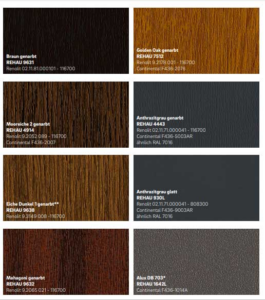
Sikkens, a timber paint and stain manufacturer based in the Netherlands, offers “A Rainbow of Colours for your log home”. Below is am image from their website of their Joinery Colour Classics.

SIKKENS Joinery Colour Classics

So, what do they say about their timber stains collection?

Joinery Colour Classics (JCC) combines the most popular opaque and translucent colours in Europe in one comprehensive collection.

Finally, the Joinery Colour Classics give log cabin owners a standardised collection of the most popular wood coatings in the whole of Europe – with perfectly matching coverings and hues. The Joinery Colour Classics are ideal for coating of dimensionally true wood parts for exterior applications.


They also offer a range of colours, expanding the choice for log cabin owners. This new range is called “Never Ending Impressions”.

SIKKENS Never Ending Impressions

SIKKENS Never Ending Impressions NEI collection, developed at the Akzo Nobel Aesthetic Center, shows the entire spectrum of harmoniously balanced colours of subtle to vivid expressiveness, ideal for TIMBER LIVING log cabins, garages and garden offices exteriors..

Preventative wood protection and a naturally beautiful colour collection are typical features for SIKKENS translucent coats.

This leaves more room for creative freedom and the implementation of the very personal taste in colour on your log cabin. If SIKKENS is good enough for Walt Disney and McDonald’s, then it just might be good enough for you!

Where to get your log cabin colours?

Sikkens is available at all Pat McDonnell Paints Stores (Dublin, Cork, Galway, Limerick, Kilkenny, Athlone and Tralee) www.mcdonnellpaints.ie

You should also be able to get them from you local hardware store. Many stores offer a basic range of Sikkens stains, but you may need to order specific coours through the Dulux rep that deals with your ocal shop. A note of caution – the colour charts they offer are not very accurate, because different stains will come out with different shades, depending on the timber they are applied to. This is due to the translucencs of the stain itself, and cannot be helped.

unfortunately, you will need to buy a couple of the smallest pots with different colours, and try them out on the log cabin timber. (Make sure the lads from Timber Living leave you some clean timber onto which you can apply your samples). These samples are not the cheapest (it cost me about €15 a tin!), but you want to get the job right at the end of the day.


How many coats of stain does my log cabin need?

Before you apply any stain to your log cabin, you should apply two coats of ordinary wood preservative. This is a quick job, but it is important. Once that is done, you will need three coats of Sikkens. Read the instructions carefully. Sikkens offer one product that is especially for cabins with high exposure to sunlight. It has UV protection built in. Normally, this is not required in Ireland, but have a good chat with the Dulux rep and read the technical information supplied by Dulux before you proceed.


And feel free to give us a call to discuss this further, or visit one of our showrooms to see the real thing.

Posted on Leave a comment

What to look for when buying a Log Cabin

There’s one quick answer – QUALITY!

If you’re buying a log cabin, you want quality – quality timber and door/windows materials, quality manufacturing , quality insulation,and quality installation. And most importantly of all, you want quality design – in the look of your log cabin, and in the engineering.

What are the problems with log cabins?


When you’re viewing your log house, keep a close eye on the finishing.

Do all the corners match exactly?


Poorly matched corners can be an indication of a number of things, from minor innacuracies in production, to settling faults. If there are any issues with the corners (both vertical corners, and junctions where the walls meet the floor or roof), walk away.


Are there any rough-cut ends?

Rough cut ends mean that the timber sent from the factory was either innacurate or damaged. Damage can happen on a building site, so one rough cut edge is forgiveable, but if there are many, this indicates either that the factory don’t know what tey are doing, or the guys who built the cabin don’t know what piece goes where. Too many roughly cut or hand sawn timber ends should make you very nervous.

How solid are the doors and windows?


All of the windows and doors should, of course, be double-glazed: your windows should be tilt-and-turn, and your exernal doors should have five-point locking. And everything should feel extremely solid. The quality of external doors and windows is extremely important, as they have to remain solid while facing the warmth of the interior while at the same time putting up with the cold extremes of winter. Any sign at all of looseness in new windows and doors should be screaming “let’s get out of here!” to you.

Are there any nice timber log cabin details?

Nie tmber details, generally around the windows and doors, or at the roof beams, demonstrate the manufacturer’s interest and dedicatin to producing a quality living environment, and the value of these should not be underestimated when assessing the log cabins available in the market. Quality touches in your log cabin will be appreciated over the years as you notice them and appreciate them, while a log cabin with a “bare bones” interior is not going to generate much love or pride for the owner.

Get a Double wall log cabin, with insulation

You will need insulation in your log cabin– a three inch thick (75mm) timber wall is not sufficient in the Irish climate. I guarantee you there will be condensation and damp problems if you build in this way. And once that happens, the only way to fix it is with exterior insulation. Also be sure that there is freedom of movement between the interior and exterior walls. During the winter, the exterior will be cold and damp, while the interior will be warm, and in the Summer, you will have a cool interior and a warm exterior – your timber will expand and contract according to temperatre and humidity. Watch the video above, which explains Timber Living’s Log Cabin wall construction detail.

Rockwool or PIR (Kingspan) Insulation?

Always look for at least 100mm insulation in the walls and roof, if you want to keep your heating bills in your log cabin down. And very importantly NEVER ever use rockwool under your floorboards! You’ll get condensation from the cold surface of your slab, which will be soaked up by the rock wool, and your floor will be FREEZING!

Log CabinWall Height

It might not be obvious, but the height of your walls is very significant to the feel of your log cabin. Many log cabins have low walls, to save on materials, time and money. But the problem is that the roof is lower, and the feeling of openness you get in a Timber Living log cabin is not there in our competitors.

When people visit our log cabin show houses, their first impression is always VERY positive, but often times, our visitors cannot put their fingers on WHY the room feels so good. Its because our roofs are high, and there is NO claustrophobia. You won’t get that in any other log cabin in ireland.


How Long Can You Live In A Log Cabin?

This is a question that has been asked over and over again, for obvious reasons, nd the answer is “you can live in a log cabin for a lifetime” as long as you maintain the wood well. And that is not a difficult thing to do. Exterior treatment every three or four years, dependint on the exposure to wind, rain and sunlight, if easy and cheap to do, and will keep your cabin going for decades. There is a sixty year old timber home 500 yards up from the Timber Living Log cabin showhouse in boyle. It used to be the club house of the local golf club (since moved to another location), and the timber on the exterior of the building is still as good as new. it has clearly been well maintained, and it proves that tese building will last a lifetime. (Come and see it for yourself!)


How long do log cabin homes last?

This is pretty much the same question as the one above, but people ask for different reasons, and do different searches in Google, so, in the interest of answering everyone’s questions, and informing the public as to the benefits of log cabin living, we have included the question here again. And, as you may have already read, they last a lifetime. We confidently predict a minimum lifespan of fifty to sixty years, if the log cabin is well-maintained. Boats are built of timber, and last because of the proper treatment, so there is no reason why a log cabin should not last for decades.


What do I need to know before buying a log cabin?

There are a number of things you will have to think about if you are considering buying a log cabin, and we have answers to all of your questions. Most of the asnswers should be available in these blog posts, but we would be delighted if you would call to our show houses in Tullow, Boyle or Cork so we can answer your questions directly.

So, whether you’re wondering about :

  • What size log cabin should I buy

  • Can I get planning for a Log Cabin

  • Can I get Finance For a Log Cabin

  • How easy is it to maintain a log cabin

  • What should I look for when buying a log cabin

  • How long will a log cabin last

  • What heating system can I put in to my log cabin


Just give us a call, make an appointment, and come and see us and our showhouses. If you’re thinking about buying alog cain, a trip to Timber Living Log cabins makes a shed-load of sense!