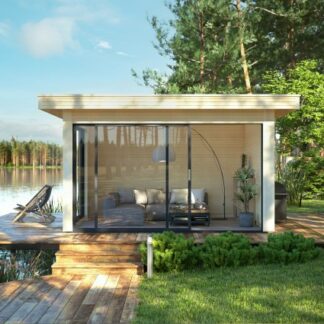
Ireland is on the brink of one of the biggest modernisations to its planning laws in over two decades — and it could be a game-changer for modular housing, cabins, garden offices, granny flats and other small-scale builds. What was once a red-tape-heavy process is now being simplified, offering more flexibility and clarity for homeowners, landowners and rural communities.
Here’s everything you need to know about today’s planning law landscape — and what the new exempted development regulations being drafted could mean for you.
🏡 What Planning Law Currently Allows
At present in Ireland, house extensions and outbuildings benefit from “exempted development” rights — meaning you don’t need planning permission for certain small builds if they meet specific criteria (size limits, location behind the home, etc.). Under current rules:
- Detached structures up to around 25–40 m² can be built without permission — but modular homes and garden cabins intended for living accommodation typically still require planning approval.
This has been a barrier for many homeowners or landowners who want to use modular units for flexible accommodation — such as granny flats, home offices, studios, or rural workforce housing.
📣 What’s Changing: Exempted Development Law Updates
A wide-reaching review of exempted development regulations is now underway as part of the Planning and Development Act 2024. The Irish Government has confirmed:
- A public consultation on updated exemptions closed in late 2025, with over 900 submissions — more than half of them supportive of extending exemptions to modular-style homes up to 45 m² to the rear of an existing dwelling.
- These updates are part of an implementation plan intended to modernise planning provisions that haven’t been substantially updated in 24 years.
- Draft regulations were discussed in the Dáil in early 2026 and are at an advanced stage — including exemptions for standalone modular units behind houses.
Currently, these updated exemptions are not yet law and the existing planning regime still applies until the new provisions are formally signed into law later in 2026.
🛠️ Why These Planning Changes Matter for Modular Housing
If enacted as proposed, the updated planning exemptions will:
✔️ Remove the need for planning permission for standalone modular homes up to around 45 m² behind a dwelling
✔️ Streamline the process for garden cabins, granny flats, studios, offices and extra living spaces
✔️ Free up local authority planners to focus on larger developments
✔️ Help homeowners and landowners adapt their existing property faster and more affordably
These changes reflect growing recognition from policymakers that flexible, smaller dwellings play a role in addressing housing challenges and evolving family living needs.
🧠 Public Reaction and Concerns
While most submissions to the consultation were supportive, some housing advocates have voiced concerns:
- Safeguards are needed to ensure that exempt structures do not become sub-standard rental units.
- Rights-based protections should be included for tenants and elderly residents.
These voices are helping shape the final regulations.
📌 How This Could Impact You
If you’re thinking about installing a modular cabin, granny flat, garden office or detached living space, the upcoming planning exemptions could make the process faster, simpler and cheaper:
✅ No planning application needed for small modular units (once exemptions pass into law)
✅ Ideal for extra family accommodation, home offices, guest houses, studios, Airbnb or rental spaces
✅ Offers flexible options for rural landlords, farmers and first-time buyers
Existing exempted development rules may still apply now — but changes are coming soon. Always check with your local council before starting any build.
✨ Tips Before You Build
Even if planning permission won’t be required under the new regime, be sure to:
- Confirm updated exemptions are legally active in your council area
- Ensure your modular build fits the size and location criteria
- Check building regulation compliance (fire safety, insulation, waste, etc.)
- Choose a trusted modular builder familiar with Irish planning law
🔍 Final Thoughts
Ireland’s planning law modernisation marks a major step forward for homeowners, rural families and landowners looking for flexible living solutions. With the right planning exemptions in place, modular homes and cabins could become a mainstream homebuilding option — offering affordable, adaptable, and ready-to-install spaces without the wait and cost of lengthy planning approvals.
Stay tuned as these regulatory changes progress through 2026 — and consider how modular housing could unlock the full potential of your property.
Ready to take the next step? 🌲
✨ Visit one of our showrooms to explore your options in person
✨ Speak directly with our cabin experts
✨ Get clarity on planning, design, and next steps
Your new home starts with a conversation.
📍 Showroom Locations:
Tullow, Co. Carlow: +353 59 918 1039 / +353 86 821 4537
Boyle, Co. Roscommon: +353 86 817 0429
Carrigaline, Co. Cork: +353 87 646 4280