Capturing the essence of Irish gardens with their rich greenery and peaceful corners ideal for unwinding, these cabins offer a snug and serene retreat. For homeowners yearning to elevate their outdoor space, a secluded natural cabin makes the perfect addition. Scandinavian log cabins present a charming option for those in search of a garden hideaway. Their rustic charm, sustainable features, and energy-efficient design harmoniously blend with the verdant surroundings, ensuring a luxurious and eco-friendly garden sanctuary.
Timber Living – a rich heritage
Timber Living, the longest running provider of Scandinavian log cabins in Ireland , was founded thirty years ago. With our years of experience, we specialize in creating and setting up premium log cabins made from Scandinavian timber.
Our teams at Timber Living, with locations in Carlow, Roscommon and Cork, possess vast knowledge in delivering bespoke log cabin projects. We ensure you have access to the finest choices available. From the initial design phase to the final installation carried out by our skilled installation team, we manage every aspect of the process.
Scandinavian Log Cabin
Scandinavian Quality Craftsmanship
Scandinavian Log Cabins in Ireland are crafted using top-quality pine wood imported sustainably from Scandinavian forests. The harsh climate of northern Scandinavia nurtures a robust, long-lasting timber ideal for constructing log cabins.
The exceptional durability of Scandinavian pine surpasses that of other wood varieties, often lasting 50-60 years. Its natural resistance to moisture, decay, and pests is a result of slow growth in the challenging Scandinavian environment.
Sustainable Building Materials
Norway Spruce – excellent timber for building
To ensure sustainability, the Scandinavian pine used in our Log Cabins is responsibly sourced and certified by the Forest Stewardship Council (FSC). This certification guarantees that the wood originates from forests managed in a way that benefits the environment, society, and the economy.
Enduring Log Cabins
Crafted to endure Ireland’s mild maritime climate, TimberLiving log cabins are perfectly suited for the region. (More details on – Log Cabins Ireland). Given the frequent rainfall and damp environment throughout the year, our cabins are designed with solutions to manage moisture and condensation efficiently.
Insulation and Waterproofing
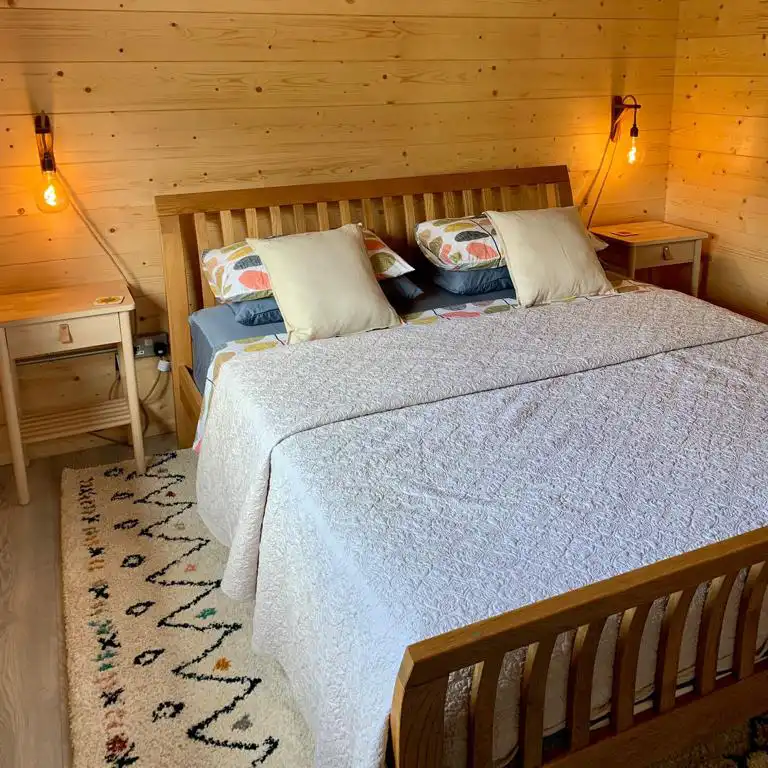
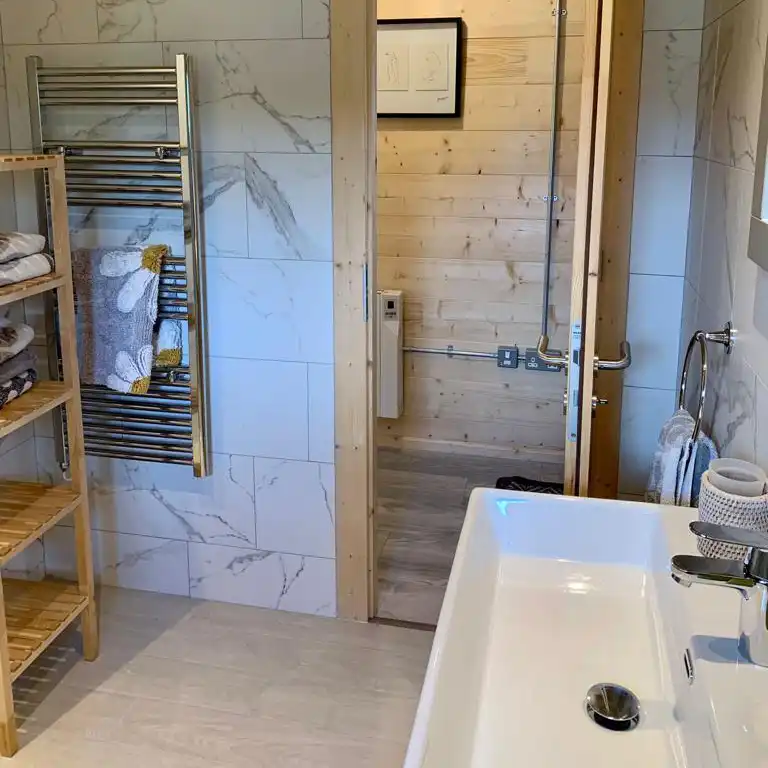
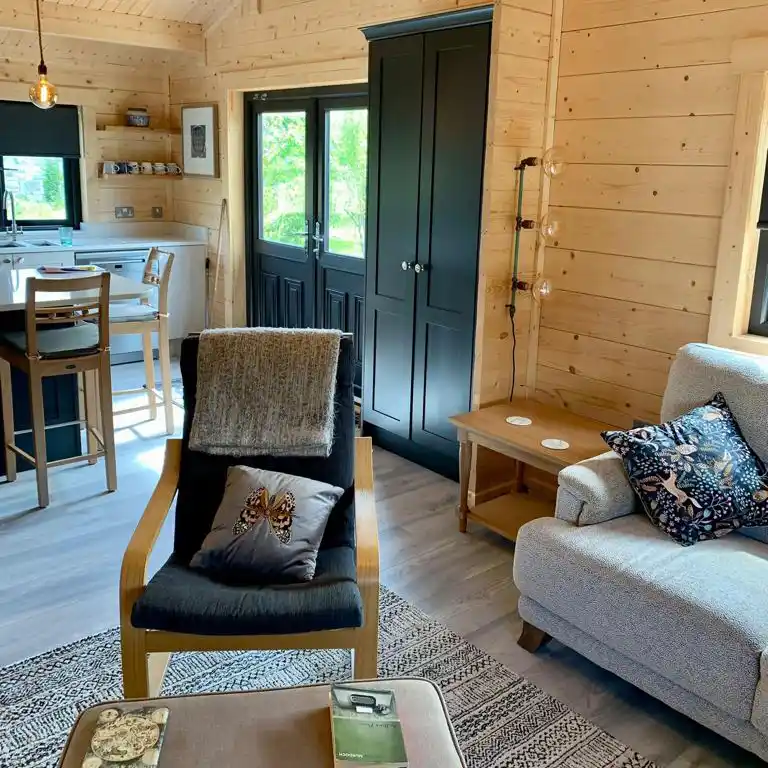
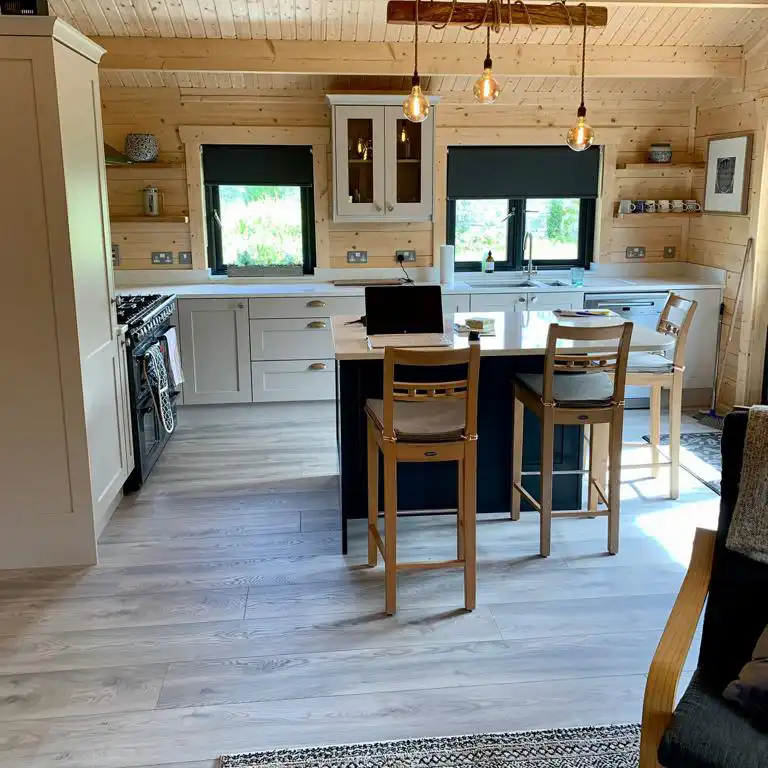
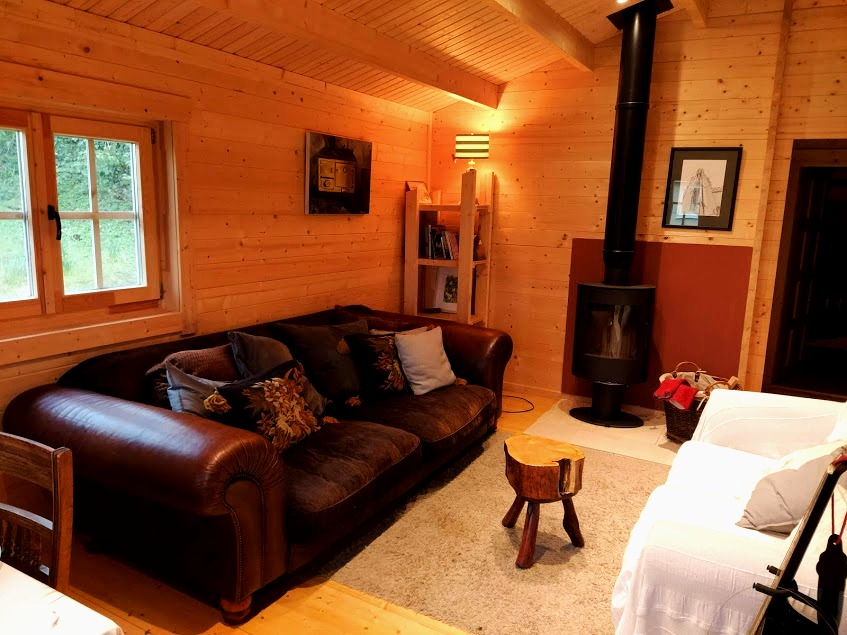
Interior of a Scandinavian Log Cabin
Effective insulation, watertight seals between the wall logs, trims, and flashings all work together to shield against heavy rain and moisture infiltration. This ensures a cozy and dry interior to your Scandinavian log cabins Ireland, regardless of the season.
The foundations on all of our cabins should be 20mm smaller than the size of the cabin itself, ensuring that rain water can never pool underneath, and keeping the cabin base dry and rot-free.
Explore our extensive range of Scandinavian Log Cabins.
Whether you’re looking for small garden log cabins or a luxurious multi-bedroom cabin, two bedroom residential cabin, three bed log home, we have options to suit your needs. We also do bespoke residential log cabins. Our traditional Scandinavian log cabins are versatile, serving as guest accommodations, granny flats, fitness studios, saunas, workshops, and more. Customize your cabin with assistance from our team to ensure it aligns perfectly with your requirements, while always adhering to local planning regulations.
Advantages of Scandinavian Log Cabins
Scandinavian log cabins offer a range of advantages, including exceptional energy efficiency due to their thick log walls, insulation, and draft-proofing, resulting in reduced energy costs. Their natural appearance, crafted from beautiful pine wood and devoid of artificial materials, creates a charming rustic feel. With proper upkeep, these cabins can endure for 50 years or more. Their versatility allows them to serve various purposes such as a home, office, or guest house. Additionally, Timber Living collaborates with customers to tailor each cabin to their unique preferences and requirements.
The Government is considering easing regulations on cabins and modular homes placed in back gardens as part of its strategy to address housing supply challenges.
Planning changes not agreed yet…
Can I build a log cabin without planning permission?
Currently, homeowners can construct extensions up to 40 sq m without needing log cabin planning permission, but stand-alone habitable buildings of that size require approval if they are separate from the main residence.
A proposal being crafted within the Department of Housing looks at planning exemptions which would allow independent modular or cabin-style residences (our one bedroom log cabins would be ideal here) to be built without log cabin planning approval.
Minister working hard…
John Cummins, Minister of State at the Department of Housing, has recently conferred with officials regarding whether specific types of exempted developments could be expedited, particularly in light of planning legislation enacted last year. These reforms intend to facilitate “intergenerational transition” between the primary house and the smaller dwelling.
Probable size restrictions
The sizes of these structures would likely be capped at what is currently permissible without planning approval, akin to traditional home extensions. Consequently, any plan for construction exceeding 40 sq m would still require the necessary permissions.
Officials are in the process of finalizing a document on this initiative, which reportedly has backing from the Civil Service. Input will be solicited from all Government departments, and a public consultation is also on the horizon. Mr. Cummins is keen on an expedited introduction of these exemptions to log cabin planning.
If this measure receives approval, it would likely that log cabin planning be restricted to locations where ample land is accessible on the property.
The goal of the exemptions is to provide younger individuals, who are finding it challenging to enter the housing market, with the chance to live independently in the short term, with a potential future option for parents to transition into the smaller residence.
Certain matters still need to be clarified in the process, such as whether the structure can be sold independently of the main house in specific scenarios.
The Government is advancing with a range of reforms as it faces significant pressure regarding the housing crisis, particularly after failing to meet last year’s housing targets, which includes enhancing compulsory purchase order (CPO) powers. On Tuesday, a spokesperson for the Government was unable to specify when new CPO powers would be enacted.
We got together to answer all your questions about building a log cabin in Ireland. Have a listen to the video or read the transcript below. But don’t hesitate to give us a call or come to visit us whenever it suits. We’re always keen to answer your questions about building a log cabin talks.
Play
Do you have questions about building a log cabin?
Log cabin talks can provide invaluable insights and tips for your project.
Hi everyone, welcome to cabin talks. We are here today and we’re joined with Connor. Now Connor is here to help us delve into all the questions, most common questions such as how long it takes to build a cabin, the electrical work. So Connor, would you mind telling us a bit about the schedule and the preparation before buying a log cabin?
Preparation
Sure, sure there’s a lot to it I suppose, but basically once you find the cabin that you’re interested in, and obviously you come down to our showrooms, we go through all the ins and outs and anything you see can be adjusted: change of windows, bigger rooms, all that. But once you have decided on what you want, we look for 4,000 euro deposit and then we put things into production, we give you a contract, we sign it, you sign it, and in 10 weeks we can have that on site. So before we get there, you need to have concrete base built and we’ll give you specific dimensions on that base, that base is gonna be a little bit smaller than the timber cabin itself, because the cabin, it has to overhang. The biggest thing with making a cabin last is that you don’t have water pooling underneath. Right. Really important. Once that’s done, you’re ready to go.
Sure, sure there’s a lot to it I suppose, but basically once you find the cabin that you’re interested in, and obviously you come down to our showrooms, we go through all the ins and outs and anything you see can be adjusted: change of windows, bigger rooms, all that. But once you have decided on what you want, we look for 4,000 euro deposit and then we put things into production, we give you a contract, we sign it, you sign it, and in 10 weeks we can have that on site. So before we get there, you need to have concrete base built and we’ll give you specific dimensions on that base, that base is gonna be a little bit smaller than the timber cabin itself, because the cabin, it has to overhang. The biggest thing with making a cabin last is that you don’t have water pooling underneath. Right. Really important. Once that’s done, you’re ready to go.
Building schedule
We’ll be there for, depending on the size of the cabin, probably three days to build the outside of the cabin, walls, roof. Only three days. Three days. Wow. All the work is done in the factory really, so it’s just a matter of putting the parts together.
So we put the outside walls, ceiling boards, and doors and windows, and we go away then and you have a week or 10 days to organize your plumber and electrician to do their first fix, pipes and wires. Once they’re done, we can come back then, do all of the insulation, put in the floors, walls, roof cover, and then we’re done. And that’s another three days, four days, depending on the size of the cabin.
We’ll be there for, depending on the size of the cabin, probably three days to build the outside of the cabin, walls, roof. Only three days. Three days. Wow. All the work is done in the factory really, so it’s just a matter of putting the parts together.
So we put the outside walls, ceiling boards, and doors and windows, and we go away then and you have a week or 10 days to organize your plumber and electrician to do their first fix, pipes and wires. Once they’re done, we can come back then, do all of the insulation, put in the floors, walls, roof cover, and then we’re done. And that’s another three days, four days, depending on the size of the cabin.
Financing and builder details
Going back to the 4,000 deposit, I’m interested about this. So after the 4,000 deposit, what happens? You have to pay a full payment after that, or can you pay an installment?
Well, the first thing we should say is that a 4,000 deposit is not a big deposit compared to a lot of companies that look for 50%. So we’d like to think we’re generating a bit of trust there. But after that then, we arrive and there’s three payments to be made. The remainder that’s left,
we look for a payment when we arrive on site, a payment after the first three days when we, what we call, we reach ridge height, and then a final payment when we’re finished. Okay, thanks for clearing that up. And also in terms of the plumbing and electricity, I am a bit confused about that. So I buy my cabin and what do I do? Do I know a plumber? Do I have to find a plumber? Well, usually if you don’t have a plumber or electricity, we may be, depending on where you’re located, we may have contacts there. It’s pretty straightforward.
You need a builder, a plumber and an electrician. And what the builder will do is put in the base, but we’ll also put in a path probably up to the cabin. And underneath that path often, we’ll bring in the conduits for the electricity,
bring in the water supply and bring out the grey water and the sewage to wherever it’s going. So those groundworks are important. And then after that, your plumber, it’s important to set the dates with your plumber and electrician to say that you have a window. And if you have seven days, tell them you have three days. Okay. So you’ve got to be here on the day. And they’re very good, they understand. And the thing about a log cabin is oftentimes if they haven’t done one, they’re interested. So they’ll be keen or if they have done one, they know it’s very straightforward. There’s no chasing of walls for wires or anything like that. It’s very open. It’s a quick day. It’s indoors. So there’s no weather which can be enticing as well, depending on the time of year. So, but the electricity and plumber, very straightforward.
Well, the first thing we should say is that a 4,000 deposit is not a big deposit compared to a lot of companies that look for 50%. So we’d like to think we’re generating a bit of trust there. But after that then, we arrive and there’s three payments to be made. The remainder that’s left,
we look for a payment when we arrive on site, a payment after the first three days when we, what we call, we reach ridge height, and then a final payment when we’re finished. Okay, thanks for clearing that up. And also in terms of the plumbing and electricity, I am a bit confused about that. So I buy my cabin and what do I do? Do I know a plumber? Do I have to find a plumber? Well, usually if you don’t have a plumber or electricity, we may be, depending on where you’re located, we may have contacts there. It’s pretty straightforward.
You need a builder, a plumber and an electrician. And what the builder will do is put in the base, but we’ll also put in a path probably up to the cabin. And underneath that path often, we’ll bring in the conduits for the electricity,
bring in the water supply and bring out the grey water and the sewage to wherever it’s going. So those groundworks are important. And then after that, your plumber, it’s important to set the dates with your plumber and electrician to say that you have a window. And if you have seven days, tell them you have three days. Okay. So you’ve got to be here on the day. And they’re very good, they understand. And the thing about a log cabin is oftentimes if they haven’t done one, they’re interested. So they’ll be keen or if they have done one, they know it’s very straightforward. There’s no chasing of walls for wires or anything like that. It’s very open. It’s a quick day. It’s indoors. So there’s no weather which can be enticing as well, depending on the time of year. So, but the electricity and plumber, very straightforward.
Okay. So say for example, I have a big hill in my garden, a big lump of grass. And I just want to put a cabin there. Who do I go to first? Do I go to my builder and say, can you take this out? Or do I come to you and show you the land? What do I do? Well, really that’s the builder’s work. That’s the builder’s work.
Usually if you come to see us at any of our showrooms, bring a video, bring a video up, do a 360 of the garden shows where you’re going.
Anything can be done. You can dig into ground or you can raise up ground, whatever you have to think about where your septic tank is going and fall. Even that can be overcome. But yeah, bring a video and that’s the simplest thing. Okay. Also I live up a mountain and the road, it’s a bit small, the lane is a beaten track. Can you get up there? You’ll be amazed. And we always say, if the cement truck can get up there, we can get up there. And I’ve seen sites and you would think you wouldn’t be able to push a pram up that hill. Right. And they’ll get there around, they’ll get the concrete up there. If the concrete can go in, you see our stuff comes, it’s drop logs. So each plank, if you want to call them a log, is done individually. So we deliver on an Arctic with a forklift and then we take separate loads up. We don’t have to go up with the Arctic. So that’s not a problem.
Even if there’s a farmer with a trailer or whatever, but the lads will carry a distance too. Yeah, it’s not a problem. Not a problem. Okay, love to hear that.
Okay. So say for example, I have a big hill in my garden, a big lump of grass. And I just want to put a cabin there. Who do I go to first? Do I go to my builder and say, can you take this out? Or do I come to you and show you the land? What do I do? Well, really that’s the builder’s work. That’s the builder’s work.
Usually if you come to see us at any of our showrooms, bring a video, bring a video up, do a 360 of the garden shows where you’re going.
Anything can be done. You can dig into ground or you can raise up ground, whatever you have to think about where your septic tank is going and fall. Even that can be overcome. But yeah, bring a video and that’s the simplest thing. Okay. Also I live up a mountain and the road, it’s a bit small, the lane is a beaten track. Can you get up there? You’ll be amazed. And we always say, if the cement truck can get up there, we can get up there. And I’ve seen sites and you would think you wouldn’t be able to push a pram up that hill. Right. And they’ll get there around, they’ll get the concrete up there. If the concrete can go in, you see our stuff comes, it’s drop logs. So each plank, if you want to call them a log, is done individually. So we deliver on an Arctic with a forklift and then we take separate loads up. We don’t have to go up with the Arctic. So that’s not a problem.
Even if there’s a farmer with a trailer or whatever, but the lads will carry a distance too. Yeah, it’s not a problem. Not a problem. Okay, love to hear that.
The Housing Crisis
And also for young couples in Ireland, there’s less and less homes available. There’s less renting options available. So what would you recommend for a young couple starting out? They’re looking to buy a cabin. What sort of cases have you worked with before?
Well, obviously that happens an awful lot. It’s a big part of our business. People are putting cabins and gardens on farms and that sort of thing. And what I always say is, obviously you need to have the cabin suitable for your use. So like the Limerick cabin, for instance, the two bed, I often suggest that they put a meter onto the end to make the bedroom bigger. I just mentioned that because you can do that. We have one bed, two beds, three beds. It depends on your budget and your needs. But what I would really important is to think not just about solving the initial problem because that cabin is gonna be there for 60 years. Or longer, it can last a hundred years. So why not, when your son or daughter moves on, let’s say, then you can Airbnb it or you can rent it out on long-term, which would be easier. So set it up so that it’s separate. So that if somebody is renting that they’re not in your back, in your kitchen window. If you can do that, then it’s a great investment.
Well, obviously that happens an awful lot. It’s a big part of our business. People are putting cabins and gardens on farms and that sort of thing. And what I always say is, obviously you need to have the cabin suitable for your use. So like the Limerick cabin, for instance, the two bed, I often suggest that they put a meter onto the end to make the bedroom bigger. I just mentioned that because you can do that. We have one bed, two beds, three beds. It depends on your budget and your needs. But what I would really important is to think not just about solving the initial problem because that cabin is gonna be there for 60 years. Or longer, it can last a hundred years. So why not, when your son or daughter moves on, let’s say, then you can Airbnb it or you can rent it out on long-term, which would be easier. So set it up so that it’s separate. So that if somebody is renting that they’re not in your back, in your kitchen window. If you can do that, then it’s a great investment.
So you’ve seen people use it in terms of property investment like Airbnb’s. Absolutely, yeah. You’ve seen it used for that as well, so that’s great. So another question that we get very frequently is, how long does a log cabin last?
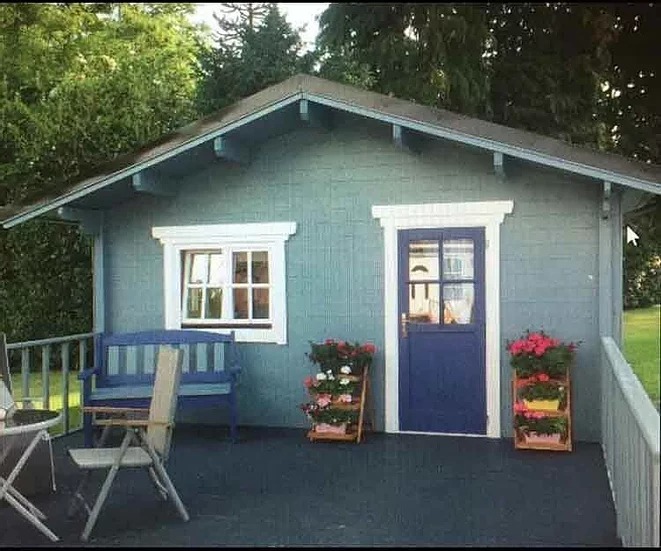
Well, it’s a good question and a log cabin can last a hundred years. We have a video on the website of Derma Bannon saying that timber buildings can last a hundred years. Wow. The important thing is that they’re built well. Yes. Built properly and they’re treated properly. So as I mentioned before, it has to be up off the ground and there’s no way that water can pool underneath. That’s, I’ve seen garden cabins and people putting them on patios. That’s a disaster, so gotta be raised up. After that, then it’s gotta be treated well. So we recommend Sikans, which is S-I-K-K-E-N-S. It’s a really good, it’s a stain, not a paint. You get all sorts of colors in it, it’s not a problem. But it’s a very well formulated product. You gotta apply it every four years or so. And once you do that, and once you make sure that there’s no dirt banked up against your timber, that sort of thing, very straightforward stuff, your cabin’s gonna last. So my cabin doesn’t have to look like a log cabin. I can actually paint this a color, a block color. For sure, yeah. We have samples on the website, blues and grays and all sorts of different colors. Yeah, yeah, they’re all available. And they, some of them look, well, they all look great. It’s down to taste, and a lot of people like the natural. The natural. Pine or the oak color. And other people wanna go for something more striking. So if I paint my cabin a block color, do I need to repaint that every year to maintain the durability of the wood? Does it lessen the quality of the wood? What would you recommend? No, no, well, it maintains the wood very well. It’s every four years. Every four years. And what it does is, because it’s a stain, it doesn’t seal the outside, and that’s important. So when rain falls on it, it stops the rain from soaking in. Rain runs down off it, which is important. But then also it lets the product breath. Timber is a natural product.
I mean, people worry about, oh, will a timber building last? Well, they make boats out of timber, you know, and they last. So let’s not. Pirates made it work. Yeah.
Boats are made out of timber, they work. You know, if it’s built properly, and it’s treated properly, it will last. And if you just go to Europe, I saw a building in France, and it was 500 years old. It’s timber. Wow. You know? So you’re saying I can’t just go into woodies and pick up a tin of paint and start painting my cabin. What would happen if I painted it with a standard paint? Why do I have to use these? Well, you can use paint.
You can use paint, but we certainly don’t recommend it because what happens is that seals the wood, and wood needs to breathe. It’s a natural product. Okay, yes. People worry about, you know, the Irish climate. Well, one good thing about the Irish climate when it comes to timber is that it’s windy, and it dries. So, you know, something that people know doesn’t occur to people, but wind dries. But the wood is breathable. Yeah, yeah. And as I say, you know, timber has been used as a building product. It has been used. Yeah. It has worked. And it’s just we’re not that familiar with it in Ireland. Yes. But I know in Boyle, where I live, there’s a timber building built in the 60s. It’s the old golf club. Wow, really? Clubhouse, yeah. Still there, you know, people live in it. Ooh, ooh. Yeah, all there. So you have timber last, absolutely. Brilliant. And these are double walls in our residential cabins, too, which is important. You know, if you’re in a residential cabin, you have to have a double wall, unless when you go for the Scandinavian heavy log cabins, which are, you know, six or eight inches. But with us, we have 45 mil on the outside, 30 mil on the inside, and, you know, four inches or 100 mil of insulation, at least. And then, yeah, it’s a perfectly good way of building a building that’s gonna last a lifetime.
Well, it’s a good question and a log cabin can last a hundred years. We have a video on the website of Derma Bannon saying that timber buildings can last a hundred years. Wow. The important thing is that they’re built well. Yes. Built properly and they’re treated properly. So as I mentioned before, it has to be up off the ground and there’s no way that water can pool underneath. That’s, I’ve seen garden cabins and people putting them on patios. That’s a disaster, so gotta be raised up. After that, then it’s gotta be treated well. So we recommend Sikans, which is S-I-K-K-E-N-S. It’s a really good, it’s a stain, not a paint. You get all sorts of colors in it, it’s not a problem. But it’s a very well formulated product. You gotta apply it every four years or so. And once you do that, and once you make sure that there’s no dirt banked up against your timber, that sort of thing, very straightforward stuff, your cabin’s gonna last. So my cabin doesn’t have to look like a log cabin. I can actually paint this a color, a block color. For sure, yeah. We have samples on the website, blues and grays and all sorts of different colors. Yeah, yeah, they’re all available. And they, some of them look, well, they all look great. It’s down to taste, and a lot of people like the natural. The natural. Pine or the oak color. And other people wanna go for something more striking. So if I paint my cabin a block color, do I need to repaint that every year to maintain the durability of the wood? Does it lessen the quality of the wood? What would you recommend? No, no, well, it maintains the wood very well. It’s every four years. Every four years. And what it does is, because it’s a stain, it doesn’t seal the outside, and that’s important. So when rain falls on it, it stops the rain from soaking in. Rain runs down off it, which is important. But then also it lets the product breath. Timber is a natural product.
I mean, people worry about, oh, will a timber building last? Well, they make boats out of timber, you know, and they last. So let’s not. Pirates made it work. Yeah.
Boats are made out of timber, they work. You know, if it’s built properly, and it’s treated properly, it will last. And if you just go to Europe, I saw a building in France, and it was 500 years old. It’s timber. Wow. You know? So you’re saying I can’t just go into woodies and pick up a tin of paint and start painting my cabin. What would happen if I painted it with a standard paint? Why do I have to use these? Well, you can use paint.
You can use paint, but we certainly don’t recommend it because what happens is that seals the wood, and wood needs to breathe. It’s a natural product. Okay, yes. People worry about, you know, the Irish climate. Well, one good thing about the Irish climate when it comes to timber is that it’s windy, and it dries. So, you know, something that people know doesn’t occur to people, but wind dries. But the wood is breathable. Yeah, yeah. And as I say, you know, timber has been used as a building product. It has been used. Yeah. It has worked. And it’s just we’re not that familiar with it in Ireland. Yes. But I know in Boyle, where I live, there’s a timber building built in the 60s. It’s the old golf club. Wow, really? Clubhouse, yeah. Still there, you know, people live in it. Ooh, ooh. Yeah, all there. So you have timber last, absolutely. Brilliant. And these are double walls in our residential cabins, too, which is important. You know, if you’re in a residential cabin, you have to have a double wall, unless when you go for the Scandinavian heavy log cabins, which are, you know, six or eight inches. But with us, we have 45 mil on the outside, 30 mil on the inside, and, you know, four inches or 100 mil of insulation, at least. And then, yeah, it’s a perfectly good way of building a building that’s gonna last a lifetime.
Building a one bed log cabin
And about the one bed cabin, because this is a cabin we get asked about a lot, is that considered a residential cabin, and would that have the double wall?
Oh, absolutely, yeah. If it’s got a bedroom in it, well, I mean, we can build it for you, a single wall, but we would not recommend it. We really need the double wall if we’re gonna be sleeping in a cabin. Okay, so– Living in a full zone, yeah. So a garden cabin would just have the single wall structure, is that? Yeah, the garden cabin is really, you know, for an office playroom, that sort of thing, you can sleep in a garden cabin for a couple of nights. In the winter, it’s not going to hold the heat as well as a double wall, it’s as simple as that, you know? It’s still 45 mil of timber, so if you, and I know of a particular friend of mine, and he runs therapy sessions in his single wall log cabin, and he lights a big fire, and the ambiance of the timber walls and the fire and all that, it’s very soothing.
Oh, absolutely, yeah. If it’s got a bedroom in it, well, I mean, we can build it for you, a single wall, but we would not recommend it. We really need the double wall if we’re gonna be sleeping in a cabin. Okay, so– Living in a full zone, yeah. So a garden cabin would just have the single wall structure, is that? Yeah, the garden cabin is really, you know, for an office playroom, that sort of thing, you can sleep in a garden cabin for a couple of nights. In the winter, it’s not going to hold the heat as well as a double wall, it’s as simple as that, you know? It’s still 45 mil of timber, so if you, and I know of a particular friend of mine, and he runs therapy sessions in his single wall log cabin, and he lights a big fire, and the ambiance of the timber walls and the fire and all that, it’s very soothing.
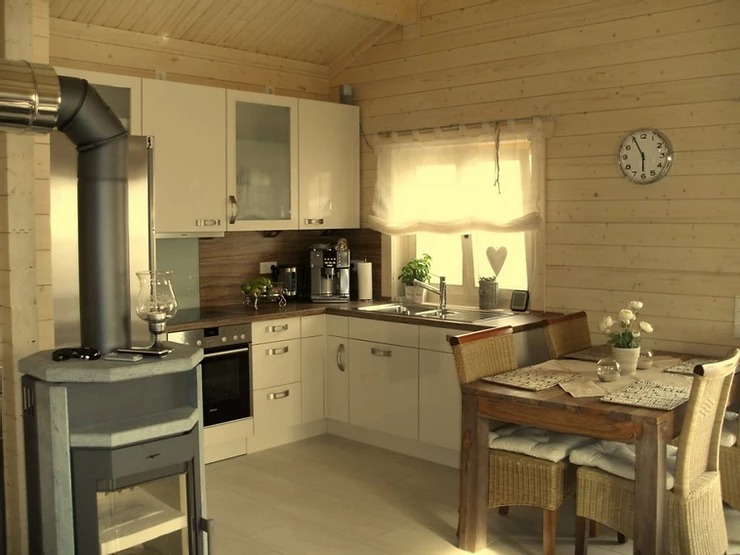
Putting a stove into a log cabin
So a stove or a literal fire? Stove works really well in a log cabin. There’s something about the radiant heat from the stove and the timber and–
Okay. It’s very nice if you’re looking to, you know, for like a garden getaway, you know, TV, glass of wine, stove, you know? So if you’re a business owner and you want to have meetings in your cabin, you have the option of having a single wall, a double wall, the price range, what sort of difference? Well, it’s very hard to say, but you have to think about it, if you’re putting in a double wall, you’re putting in two walls instead of one, you’re putting in, well, we always have insulation in the roof and the floors, but the walls are bigger, so I mean, if you’re looking at a cabin that’s 10,000, it’s very hard to say. Okay. Four or five thousand extra depends on a lot of things. So you’d recommend that they come with the idea and we can really customize it to their specific needs. But we do find people working in cabins. There’s no need for the double wall, we never get really good complaints about it. Your heated door would be higher if you have a single wall. Yes.
But with the stove, it really– Get that stove in there. It’s a great job, yeah. Everybody start falling asleep in the middle of the meeting. You gotta get down here and see it all for yourself, the quality and the craftsmanship. We are just saving time, saving you time, so come down and see it for yourself. Tullow, cork and Boyle.
So a stove or a literal fire? Stove works really well in a log cabin. There’s something about the radiant heat from the stove and the timber and–
Okay. It’s very nice if you’re looking to, you know, for like a garden getaway, you know, TV, glass of wine, stove, you know? So if you’re a business owner and you want to have meetings in your cabin, you have the option of having a single wall, a double wall, the price range, what sort of difference? Well, it’s very hard to say, but you have to think about it, if you’re putting in a double wall, you’re putting in two walls instead of one, you’re putting in, well, we always have insulation in the roof and the floors, but the walls are bigger, so I mean, if you’re looking at a cabin that’s 10,000, it’s very hard to say. Okay. Four or five thousand extra depends on a lot of things. So you’d recommend that they come with the idea and we can really customize it to their specific needs. But we do find people working in cabins. There’s no need for the double wall, we never get really good complaints about it. Your heated door would be higher if you have a single wall. Yes.
But with the stove, it really– Get that stove in there. It’s a great job, yeah. Everybody start falling asleep in the middle of the meeting. You gotta get down here and see it all for yourself, the quality and the craftsmanship. We are just saving time, saving you time, so come down and see it for yourself. Tullow, cork and Boyle.
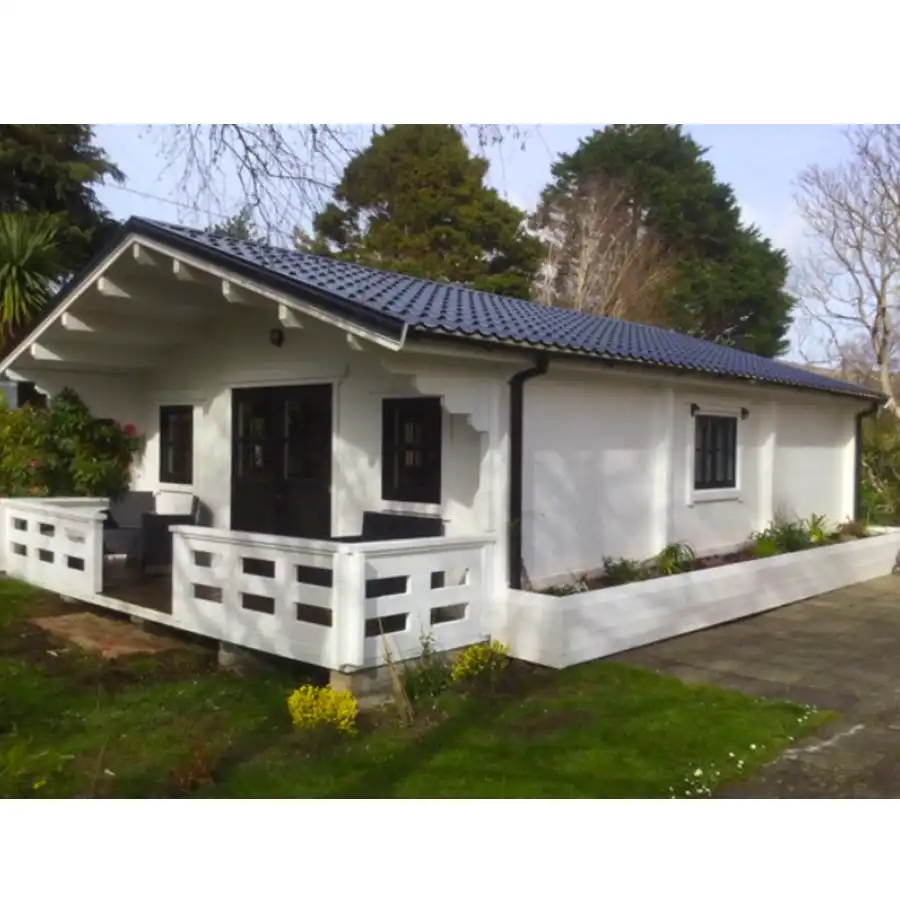
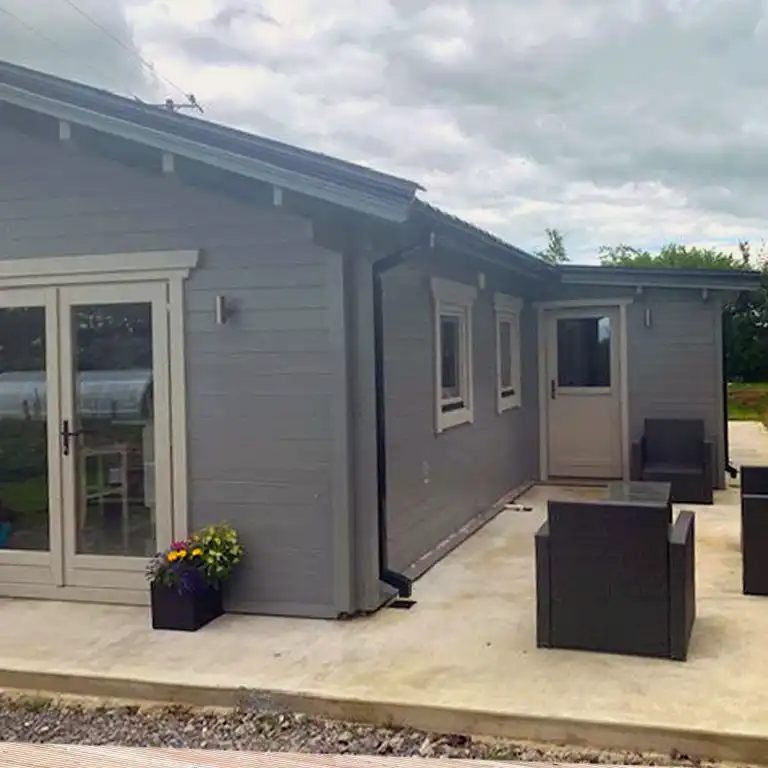
Did you know you can have a cement board exterior to your log cabin in order to make it look like a conventional cottage build? Couple this with a steeper roof and nobody will know that you’ve just built a fantastic log cabin at a great price!
Play
Cement board or timber exterior?
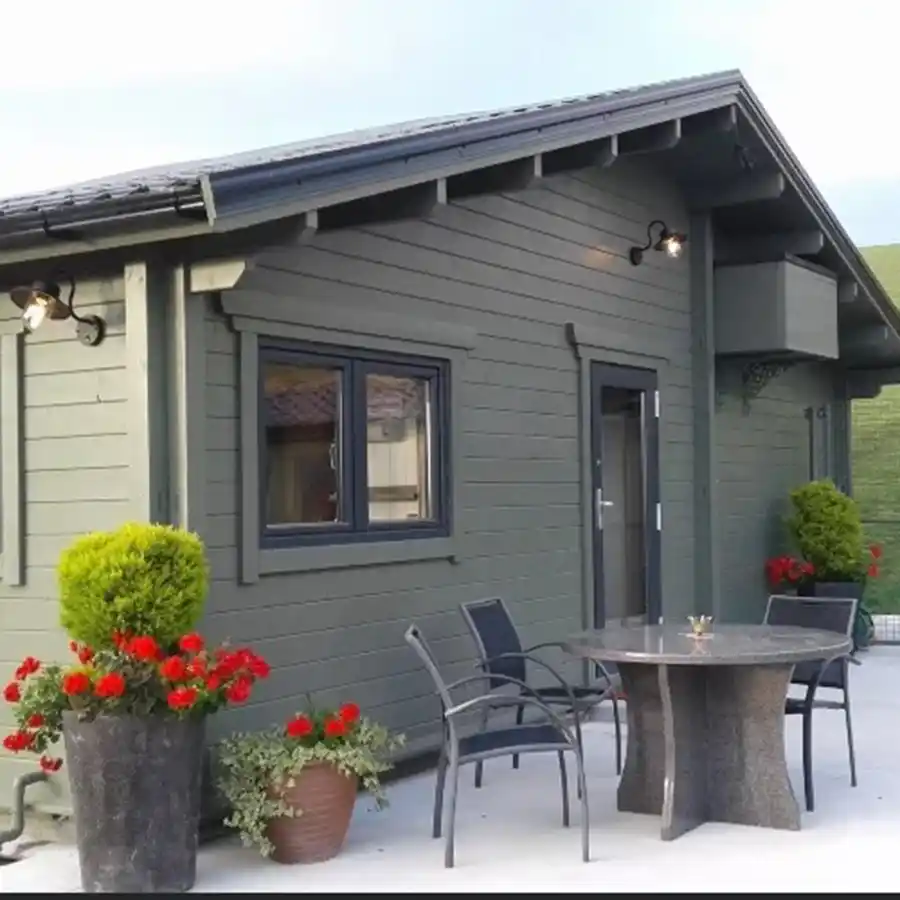
While the bulk of our log cabins have a timber exterior, we are increasingly providing cabins with fibre cement board outside walls. There are a number of reasons for this. Some people are not overly keen on the amount of maintenance required on a large cabin, even though it only requires re-staining every four years. Some people just prefer the conventional concrete look of a house. And some people are concerned, particularly in the West of Ireland, with the horizontal driving rain and how it might affect a timber build.
The higher ceilings look great
Don’t these ceilings look fantastic! He increased slope on this roof makes it look much more conventional. It also gives you better grounds if you have to go for retention on your build, which is not an uncommon thing to do and actually turns out to be quite successful in the most part. This article will give you a great idea on how straightforward it is to get retention.
Some planning retention statistics
Of the 1,260 retention applications made to Dublin City Council between 2019 and 2023, only 193 were refused.
Tipperary County Council granted 1,222, while 40 were refused.
In Clare, 664 were approved and just 18 were refused.
Leitrim County Council granted 192. Only two applications were denied.
Thinking about a heat pump and under floor heating?
It’s a common question from an awful lot of our customers and the answer is yes – You can put on the floor heating into a log cabin. Actually, our price should go down as you’re not going to need our timber floor. Here are a couple of images, one of the heap pump itself and if you look closely at the 2nd one, you will see the under 4 heating coils in the left hand side of the image.
We asked our resident expert why Norway spruce is such a good building material and here is what we got in response.
Norway Spruce – excellent timber for building
Norway spruce (*Picea abies*) is highly valued as a building material due to a combination of properties that make it versatile, efficient, and sustainable. Here’s a structured overview of its key advantages:
1. Strength-to-Weight Ratio
– Norway spruce offers excellent strength relative to its lightweight nature, making it ideal for structural applications like beams, rafters, and trusses. This balance reduces the load on buildings while maintaining structural integrity.
2. Workability
– Its straight grain and uniform texture allow for easy machining, cutting, and shaping. This enhances construction efficiency, as it resists splitting during nailing or screwing and accepts finishes well.
3. Acoustic Properties
– Known for its resonance, spruce is used in musical instruments and architectural elements requiring sound optimization, such as auditorium paneling or ceilings.
4. Aesthetic Appeal
– The pale, creamy color with minimal knots provides a clean, attractive appearance suitable for both interior (e.g., flooring, paneling) and exterior finishes.
5. Sustainability
– As a fast-growing species, Norway spruce is renewable and often sourced from responsibly managed forests, aligning with eco-friendly building practices.
6. Thermal Insulation
– Like most softwoods, it offers good thermal insulation, contributing to energy-efficient buildings by reducing heat transfer.
7. Cost-Effectiveness
– Its abundance and rapid growth make it more affordable than many hardwoods or synthetic materials, ideal for large-scale projects.
8. Dimensional Stability
– When properly dried and treated, Norway spruce exhibits moderate resistance to warping and shrinking, ensuring longevity in construction.
**Considerations**:
Durability: While not naturally decay-resistant, it performs well indoors or when treated for outdoor use (e.g., staining, pressure treatment).
Hardness: Softer than hardwoods, limiting its use in high-traffic flooring without protective coatings.
Historically and practically, Norway spruce’s versatility, coupled with sustainable availability, cements its role as a preferred material in both traditional and modern construction.
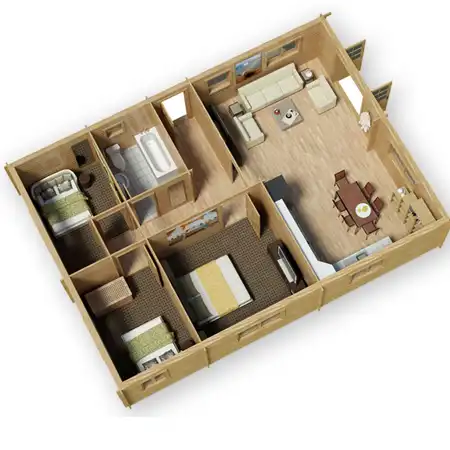
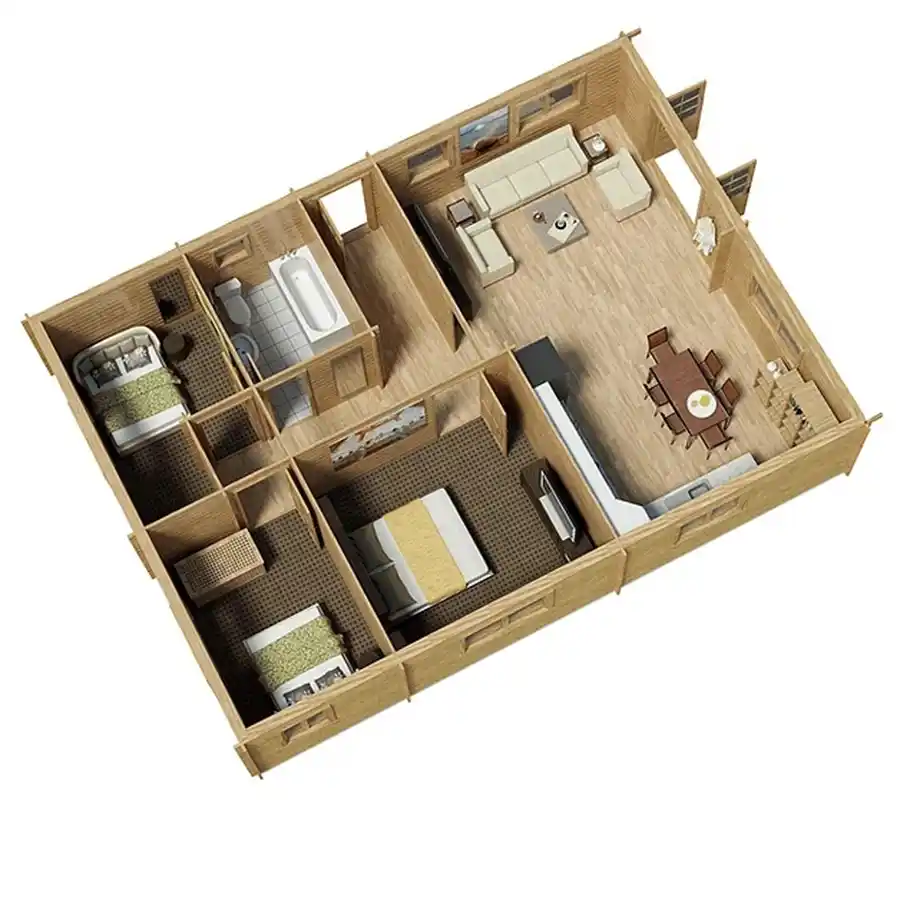
Take a look at the plans of the Tullow log cabin below.
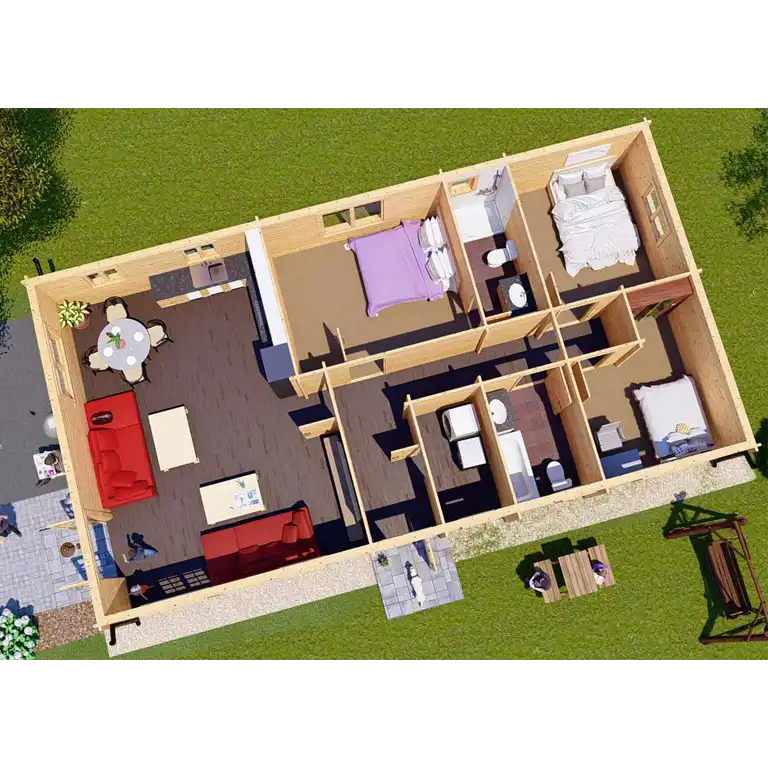
While this cabin has been a great seller for us and is very spacious, we do find people coming to us looking for additional rooms such as en suites and utility rooms. Is why we developed the Adare log cabin, which you can see in the image below. Note the addition of the ensuite and utility. Definitely not one of those tiny house plans!
Adare 3 bedroom log cabin with ensuite and utility
Making your log cabin special
Tullow Three Bedroom Log Cabin
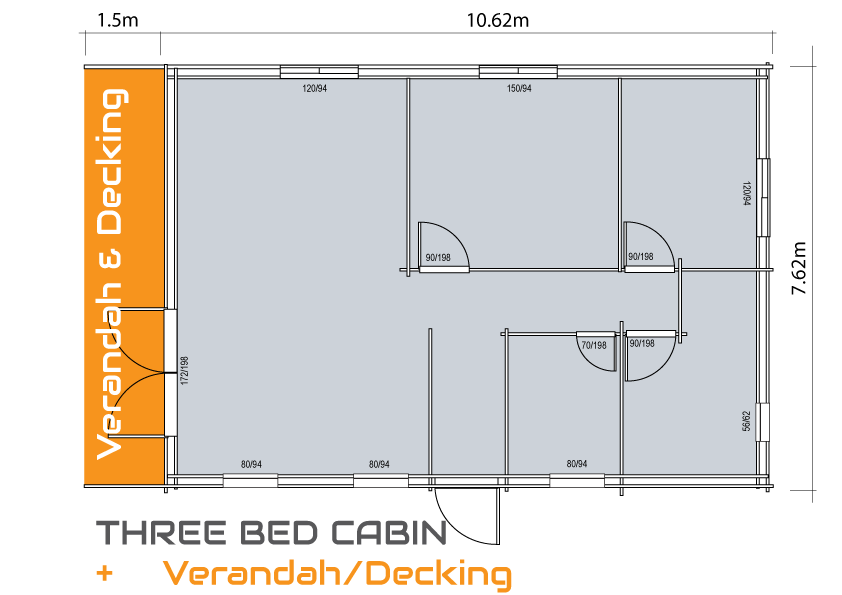
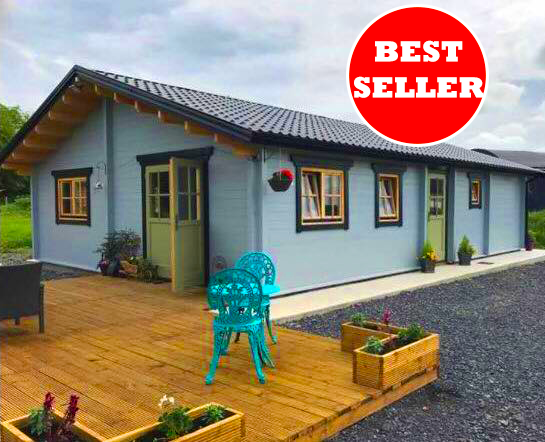
This three bad log cabin has been such a good seller that we decided to offer a couple of extra options for our interested buyers. Often times people want to extend the back of a log cabin in order to make the bedrooms bigger . Sometimes a metre might be added onto the living area of a log cabin, although in the case of the Tullow log cabin the living area is generally seen as ample without any need to extend. The third general alteration that people make add to their log cabin is to put on a veranda, decking and rails. Is a powerful addition to your log cabin which makes it look unique, stylish and very interesting.
What extras can you get on the standard three bed?
Here is a picture of the plans of our standard three bed tullow log cabin.
Floor layout of Tullow Three Bedroom Cabin
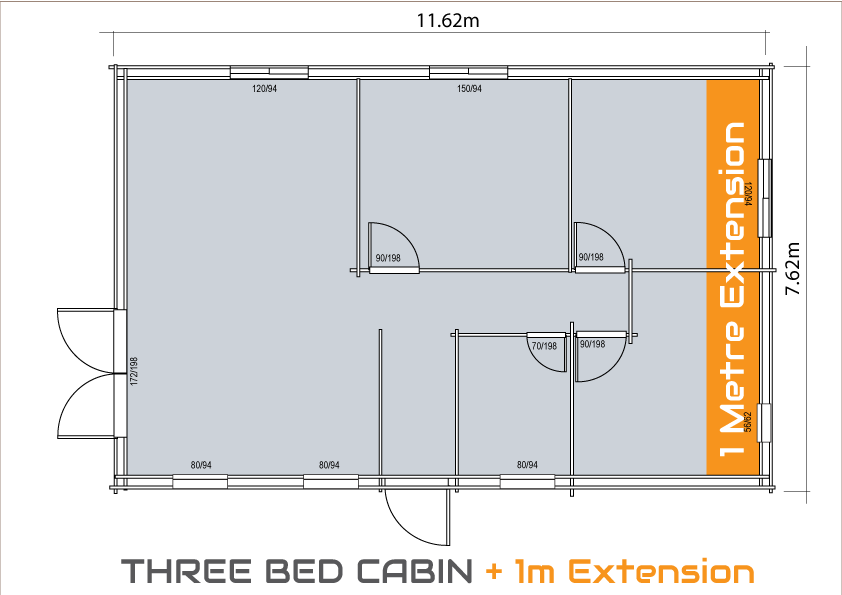
Extending the bedroom size
It is very cost effective and straightforward to order a 1 metre extension to the back end of the log cabin in order to increase the bedrooms. You can get prices on the web page here
Floor Plan of Three Bed Cabin with Bedroom Extension
Put a Veranda on your three bed cabin
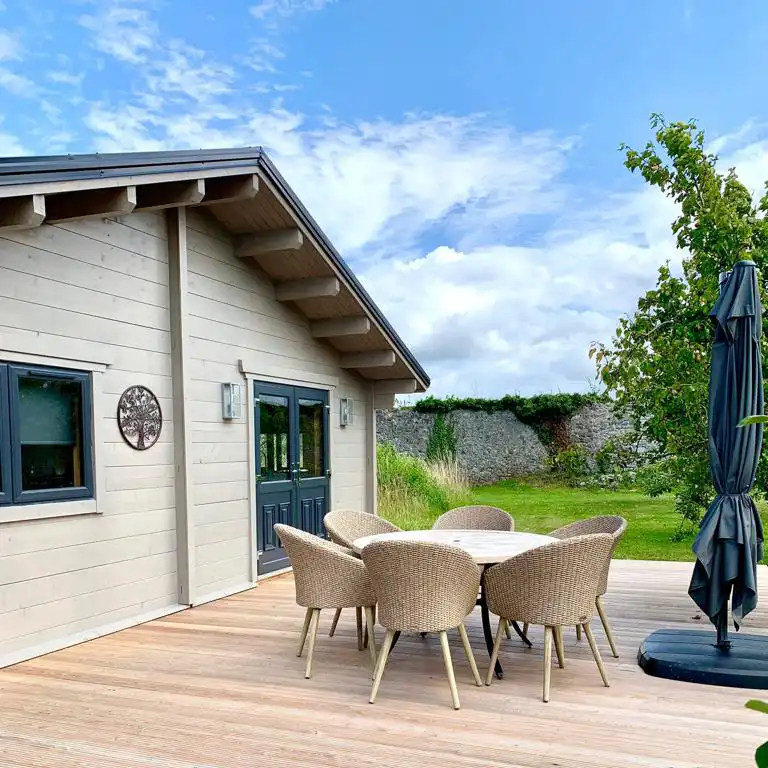
Everybody loves the lock of a big veranda overhang on their three bed cabin .
It’s also possible to put a one metre or more extension onto your log cabin at the front to make the living area bigger. We have done this a number of times for people, to great effect.
A log cabin is a perfect solution for those families looking for a cost effective alternative too expensive extra accommodation for a loved one. Of course, grannies aren’t the only ones that can stay in a log cabin Granny Flat. Granddads are welcome, as are grown up sons and daughters.
Great range of one bedroom log cabins
We have a wide range of one bedroom log cabins suitable for use as a log cabin Granny Flat. Generally they come in the same format with the main difference being extended length. You’ll notice this as you browse our wide range of one bedroom log cabins. Included a few examples below for you to peruse.
Best selling Log Cabin Granny Flat Range
Brittas Log Cabin
Cute and Cosy – Brittas One Bed Log Cabin
The Brittas log cabin Granny Flat is our standard, first in the line granny flat come up which comes in at around 25 square metres. With all of our granny flats you have the choice of adding a veranda and decking to the front, and also extending the length of the cabin to increase the living room and or the bedroom sizes.
We also insulate our log cabins to make sure that your heating costs are kept to a minimum and comfort levels are high.
Even though your luck haven’t going to be the cheapest way to provide extra accommodation for Granny, you still have to be conscious of budget. Take a read of our blog post furnishing a log cabin on a budget.
Compact in size and versatile by design, the down log cabin is a first choice for many people who are looking for something to suit their budget, but still deliver a great job in the area of low heating costs, personal comfort and cosiness and great looks from the kitchen window of the Big House.
This cabin can be built, as can all our cabins, within 10 to 12 weeks of your placing an order with us. So if you are in a position where you need a rapid solution, our quick build log cabin Granny Flats are certainly worth considering.
Wexford One Bedroom Granny Flat
The Wexford one bedroom Granny flat plays with the interior layout of the cabin in order to extend the living area. Is done by reducing the size of the bedroom, which ends up as quite a compact room. But this suits a lot of people who feel that a bedroom is just for sleeping and they are more comfortable with a bigger living area. This gives them room for activities like cooking, or crafting, or any other hobbies they might be interested in.
Roscommon granny flat log cabin
Roscommon spacious one bed cabin
The Roscommon one bedroom log cabin is the largest of our standard choice one bedroom log cabins. See from the picture you also have the option of including a veranda and decking and railings, which adds an awful lot of character to this particular log cabin.
This log cabin comes in at five metres wide by 7.2 metres long in its standard form so, while it takes up more space in the garden, it is certainly a flagship model which should be considered if you can stretch the extra money, because it gives a very comfortable interior. Is not oversized so your heating costs remain low.
The Arklow Loft Bedroom
Arklow One Bed
OK, you are certainly going to get into trouble with Granny if you propose that she sleep in a loft bed! So the Arklow Loft Bed Log cabin might not be for her, or indeed granddad! But this cabin certainly solves the issue of ground space if that is a concern of yours. The loft bed is a great solution for a space is an issue, as it is raised up high and in effect you don’t need that extra space for the bedroom so all the ground floor is living area. With a floor area of 5.43 metres by 4.4 metres, this cabin does not really eat into your lawn space!
Making changes to your log cabin Granny Flat
We have a wide range of one bedroom log cabins in our catalogue, all of which are ideal as log cabin Granny Flats. In effect all of these cabins are built with the same materials and by the same technique, so it is important for you to realise that you can make any changes you want to our log cabins, in order to get the perfect size and look for your log cabin Granny Flat.
If you want to sleep in a garden room, a garden cabin provides the ideal escape for a peaceful sleeping experience. With its tranquil surroundings and close proximity to nature, it offers a unique retreat from the hustle and bustle of daily life. The serene ambiance and fresh air contribute to a restful night’s sleep, promoting relaxation and rejuvenation. So can you sleep in a garden room? Yes, you can! The cozy interior of a garden cabin, combined with the soothing sounds of chirping birds and rustling leaves, creates a harmonious atmosphere conducive to deep rest. Embracing the beauty of the outdoors while enjoying the comfort of a well-equipped cabin is a truly delightful experience.
Garden cabins are renowned for their inviting design and aesthetic appeal. They often feature a charming blend of rustic and modern elements, creating a visually pleasing and cozy space. With their sleek lines, natural materials, and neutral color palettes, garden cabins exude a Scandinavian-inspired style that is both timeless and elegant. The use of large windows allows abundant natural light to flood the interior, enhancing the sense of openness and connection with the surrounding greenery. Whether nestled in a lush garden or overlooking a serene landscape, garden cabins effortlessly blend into their natural surroundings, creating a serene and inviting ambiance.
Play
Timber walls are a common feature in garden cabins, and they offer a range of benefits. The use of timber provides a warm and inviting atmosphere, creating a cozy retreat where one can unwind and relax. Additionally, timber walls have excellent insulation properties, ensuring that the cabin remains comfortable in both warm and cold weather conditions. The natural beauty of timber adds a touch of natural elegance to the cabin’s interior, creating a harmonious connection with nature. Furthermore, timber is a sustainable material choice, promoting eco-friendly living and reducing the environmental impact of the cabin’s construction.
Efficient Heating with Wood Stoves
Wood stoves are an excellent choice for heating garden cabins. They provide efficient heating, ensuring that the cabin remains warm and cozy even in the coldest weather. Wood stoves also add a touch of rustic charm to the interior, enhancing the overall ambiance of the cabin. With proper maintenance and careful use, wood stoves can be a sustainable heating option, utilizing renewable resources and reducing reliance on electricity or gas. Investing in a high-quality wood stove is a wise decision for those seeking comfort and warmth in their garden cabin. Although it depends on who you have to ask about planning permission to sleep!
Decor Ideas for a Cozy Atmosphere
Sure, here are some decor ideas to create a cozy atmosphere in your garden cabin: Opt for warm and earthy color schemes, such as shades of brown, beige, and green, to create a welcoming and cozy feel. Incorporate soft furnishings like plush cushions, warm blankets, and fluffy rugs to add texture and comfort to your space. Hang curtains or blinds made from natural materials like linen or cotton to create a sense of privacy and warmth. Add ambient lighting with fairy lights or string lights to create a soft and cozy glow in the evenings. Personalize your cabin with artwork, photographs, or sentimental objects that bring joy and nostalgia to the space. Remember, these are just suggestions, and you can customize your garden cabin decor according to your personal preferences and style.
Here are some tips for creating a relaxing sleep environment:
Choose a comfortable mattress and pillows that provide adequate support for your body.
Opt for soft, breathable bedding made from natural fabrics like cotton or linen.
Keep your bedroom cool and well-ventilated to promote better sleep.
Use blackout curtains or blinds to block out any external light that may disrupt your sleep.
Consider using white noise machines or earplugs to drown out any unwanted noise while you sleep.
Remember, creating a relaxing sleep environment is important for getting a good night’s rest and promoting overall well-being.
Can You Sleep in a Garden Cabin? The Essentials
Yes, you can sleep in a garden cabin. However, there are a few essentials to consider. First, ensure that the garden cabin is well-insulated to maintain a comfortable temperature throughout the night. Secondly, make sure that the cabin is secure and provides adequate privacy for a peaceful sleep. Finally, invest in a quality mattress and bedding to ensure a comfortable sleeping surface.
Choose a comfortable mattress and pillows that provide adequate support for your body. Opt for soft, breathable bedding made from natural fabrics like cotton or linen. Keep your bedroom cool and well-ventilated to promote better sleep. Use blackout curtains or blinds to block out any external light that may disrupt your sleep. Consider using white noise machines or earplugs to drown out any unwanted noise while you sleep.
We have a wide range of three bed log cabins available for you to choose from. All of these cabins can be built in a relatively short amount of time, Which means the labour cost is reduced and so the overall price to you is much more affordable.
Play
Affordable and high quality log cabins
Our log cabins all come with double walls, which means there is plenty of insulation to keep you warm and keep your heating costs down. We use a very high quality roof cover, made of pressed aluminium, will which will last a lifetime of the cabin. And our windows are available in either timber or white PVC for the same price. There is an extra price if you are looking for coloured PVC and we would be glad to discuss this with you on a visit to our log cabin show houses around the country.
How to choose your favourite three bed log cabin
There are no rules when it comes to personal choice of favourite three bed log cabin. Of course the number of rooms is the very first decision that has to be made When thinking about your favourite log cabin choice. But we are talking about three bed log cabins here so we will move on from that.
Optional Variations
At Timberliving log cabins, we are keen to give the customer exactly what you are looking for. Feel free to make changes to your log cabin design, by changing window types or even window sizes and moving doors around if you wish. You can also make rooms bigger or smaller if that suits your needs.
Veranda and decking?
A lot of people think about a veranda and decking when they picture a log cabin in their minds. We can easily add a veranda and decking to any of our log cabin designs. Take a look at our two bed variable log cabin and 3 bed variable log cabin to get an idea of straightforward options that are available to you.
Did you know you can put an affordable log cabin extension onto your house without planning permission? If you use one of our well insulated log cabins to build a log cabin extension to your house, you might find it very affordable, quick to build and easy to heat. It’s a very straightforward job as long as you have a good builder to break through the wall of your own house and connect to one of our quality log cabins.
It’s a very straightforward operation to put a log cabin extension onto an existing building. And you can use any of our one bedroom, two bedroom, and three bedroom log cabins as extensions . These can also be modified to suit your particular needs and your site, as per our range of bespoke log cabins .
Most importantly, you need a suitable face/wall of your building Which suits the connecting of a log cabin extension. Once you have a suitable site for your log cabin extension, you need to get a builder to put in a base of concrete which is 5 inches thick. We will give exact measurement of this space. It is important that the base is a 10 mil narrower all round then they lock have in itself so that water runs freely off the log cabin and away from the timber. This is done we can pretty much guarantee that there will be no fear of rot through the log cabin base. A crucial design detail on all our log cabins and has been a fail safe in this area.
Very Quick Build
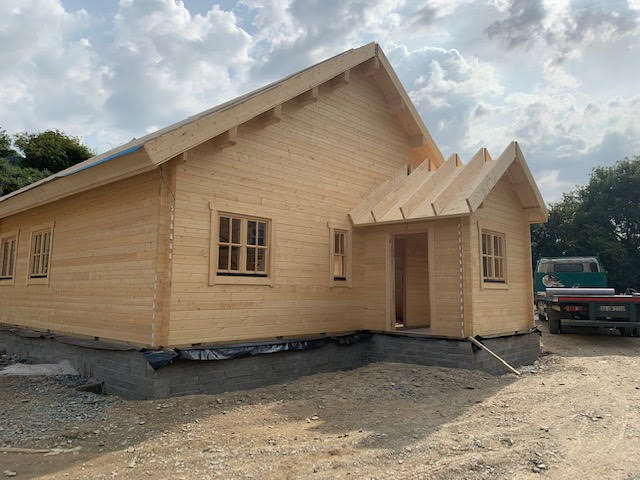
From the point of order to the completed construction should not take more than three months with our log cabin extensions. Generally, we spend three days on site building the exterior of the cabin, walls, windows, doors and ceiling boards. Then we depart from the site for a week to 10 days. During this break, the client should organise to have his plumber and electrician do their first fix of wires and pipes. This is completed, we can return to site to finish off the log cabin itself. This means putting all of the insulation into the floors walls and roof, installing the roof cover, the timber floors on the inside and of course the interior walls.
Underfloor heating is an option in your log cabin extension
Many people are asking nowadays if it is possible to put on the floor heating in a log cabin. The low is a photograph of a very innovative and attractive installation of under for heating in a log cabin house extension which we completed this year. As you can see from the photograph, the one before heating screed has been covered with attractive orange brick. We are really looking forward to seeing this room when it is tidied up and lived in. It is going to be quite the striking addition to this log cabin extension.
Orange brick as underfloor heating in this log cabin extension
Connecting to an existing building
Connecting your log cabin extension to your existing building is actually quite straightforward, as can be seen in the photograph below. In fact there are a number of ways that you can build your connecting corridor between the old and new building. What is shown below is a plywood wall which is due to be covered in insulation and cement board before final rendering.
Other methods for building your connecting corridor include using block, with a similar roof to that shown on the log cabin itself. The most attractive to some people is to use a double glazed corridor between old and new building. The important thing to remember is the height of the gutter run if you are going in at the side of a log cabin. Any builder can solve this problem but it Might not be straightforward and it is important to make sure all water can run easily off the roof of this connecting corridor.
If you have any questions about any of the options in relation to log carbon extensions or log cabins in general, please feel free to call us at any of our show houses, in counties Carlow, Roscommon, Cork, Galway and Limerick. All of us at these log cabin showrooms would be delighted to talk you through all of your questions and explain all of the options that are available to you. Are sure that you will be quite surprised with the affordability, quality and longevity of our super one, two and three bed log cabin homes.















Recent Comments